Skip to content

Not every boat lift belongs on every dock.
If the slip is narrow, clearance is tight, or waterfront aesthetic matters to you, the difference between a beamless boat lift and a traditional boat lift is worth understanding before you commit.
The U.S. has over 11 million registered recreational boats, and a growing share of their owners are looking for solutions that work well with modern, space-conscious dock designs.
Both systems protect your boat, but differently, and those distinctions play out every time you launch, dock, or ride out a storm.
This guide lays out an honest, side-by-side comparison of both boat lift types, covering structure, space, durability, and cost, so you can make a confident, well-informed call on the best option for your waterfront.
What Is a Beamless Boat Lift?
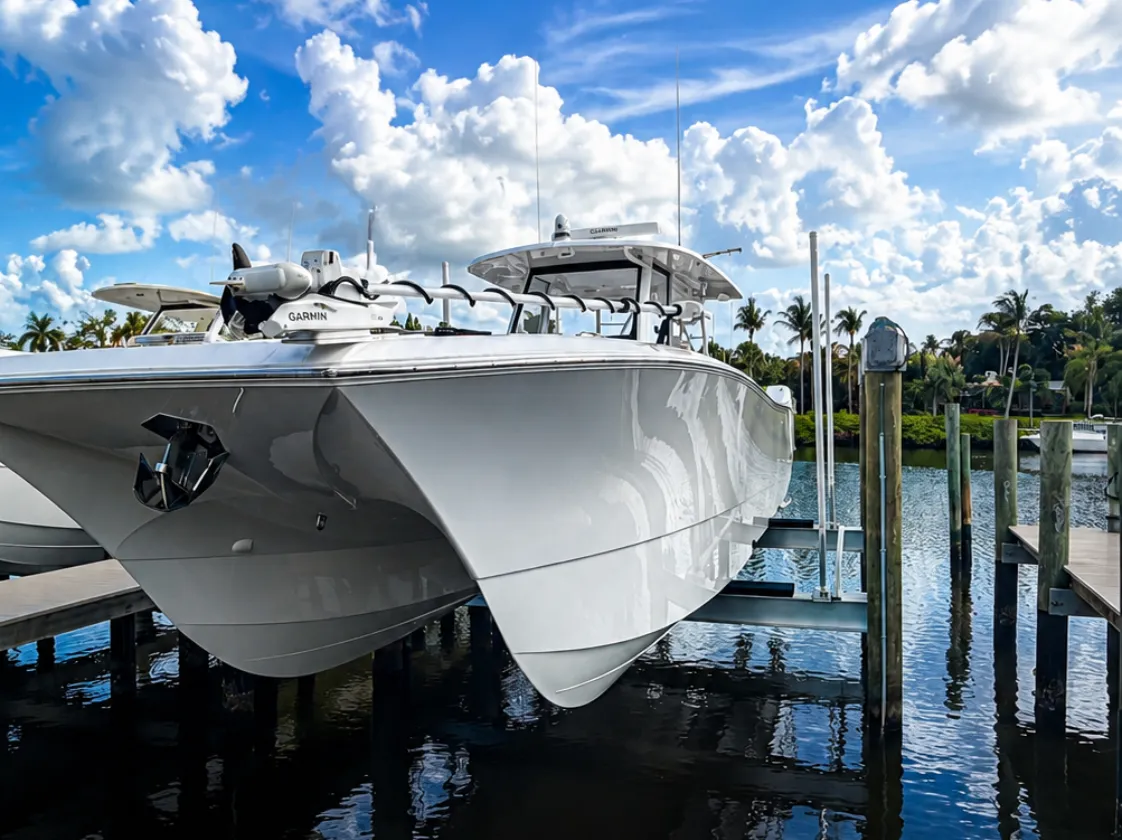
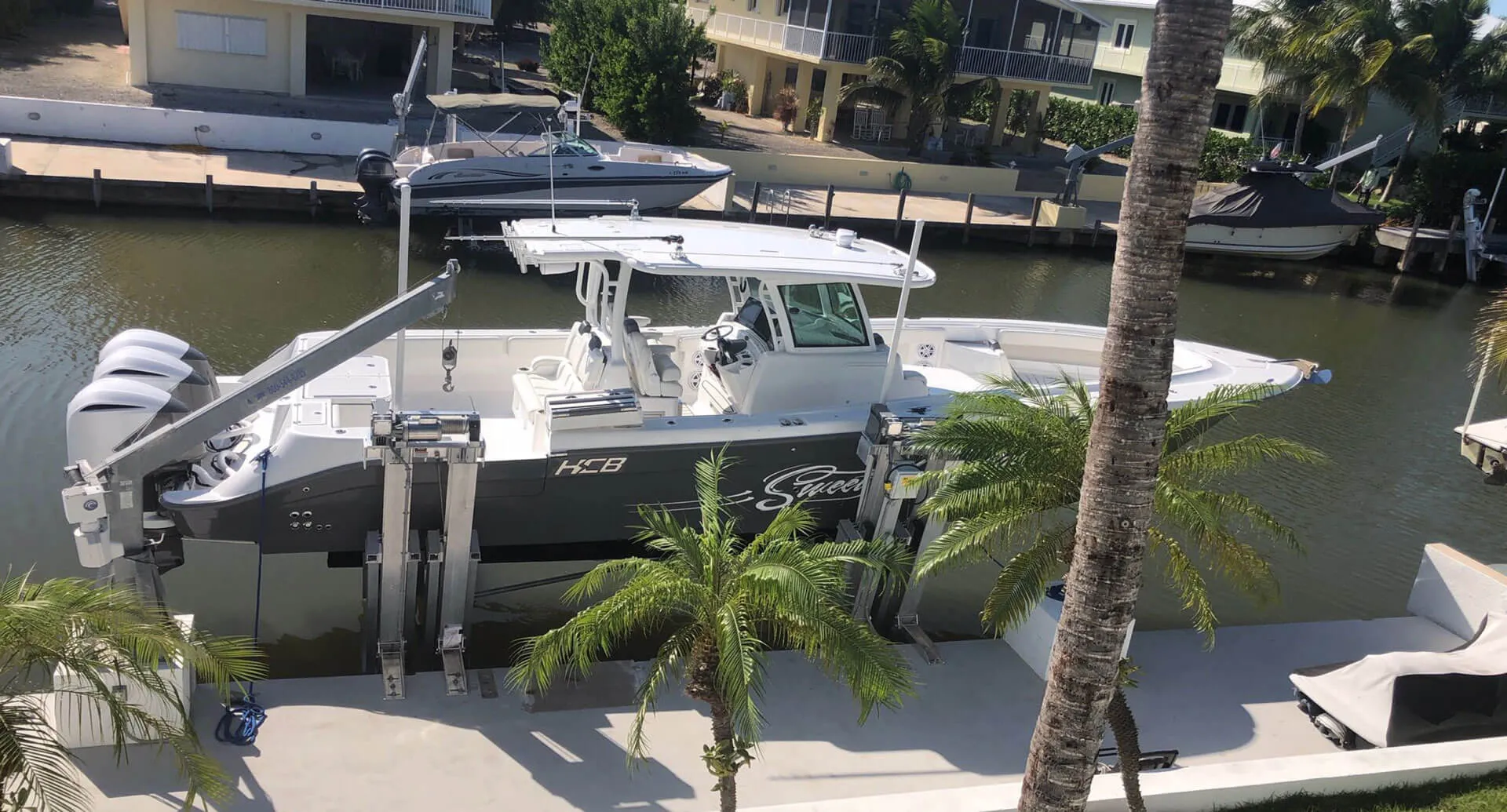
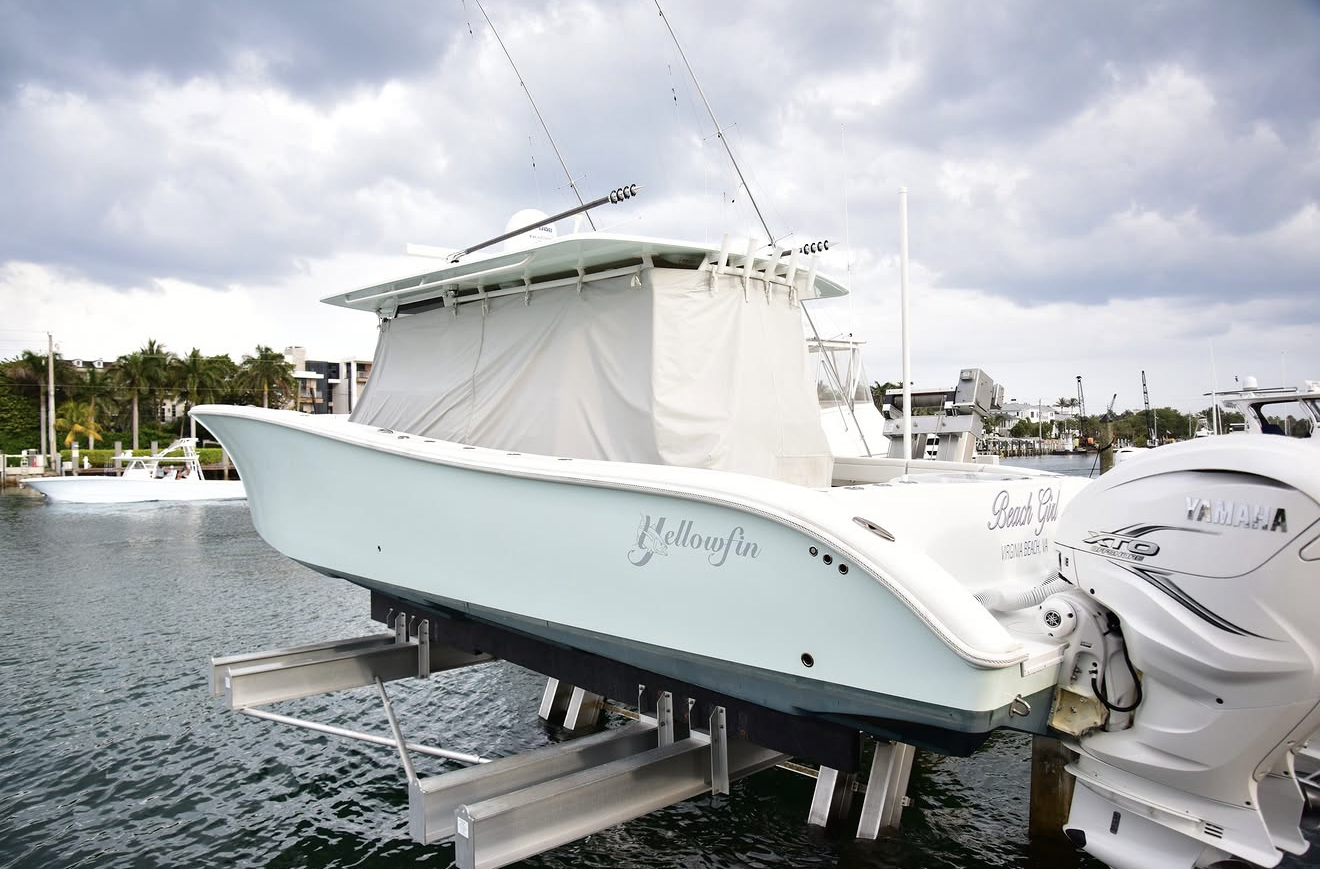
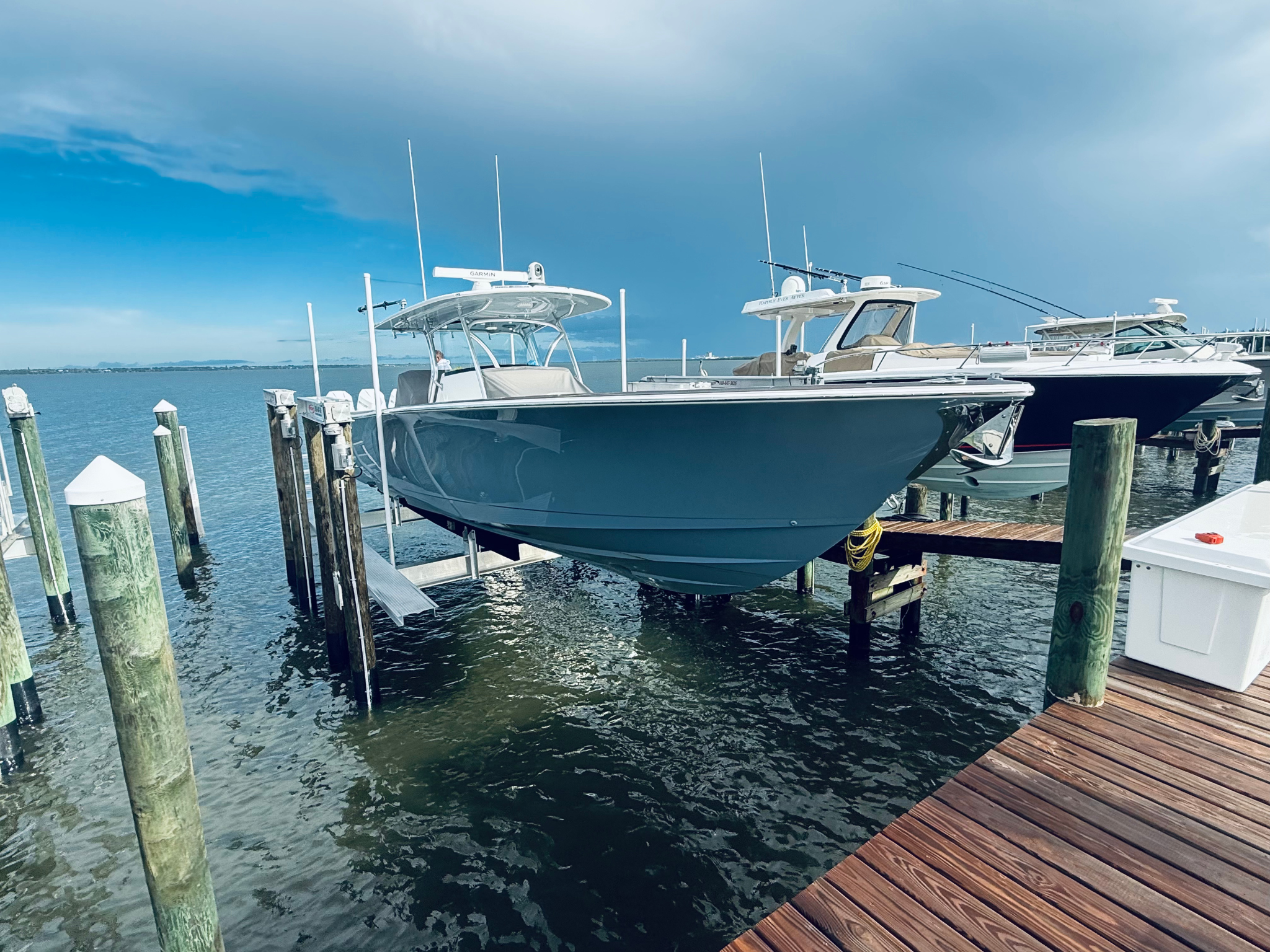
A beamless boat lift is a modern lift design that removes the horizontal overhead beam found in conventional systems. Instead of spanning a crossbar between pilings, it uses vertical structures with internal or side-mounted lifting mechanisms.
The result is a clean, open-top design with no overhead obstruction, making it an increasingly popular choice for tight or design-conscious dock layouts.
How Does a Beamless Boat Lift Work?
Rather than routing cables over a top beam, a beamless boat lift integrates its lifting system into the side structures or piling columns. Electric or hydraulic motors power the lift, raising and lowering the boat through cables or direct-drive mechanisms built into the frame itself.
Because there’s no overhead beam, the dock above remains open, giving you unobstructed movement across the full width of the slip.
What Is a Traditional Boat Lift?
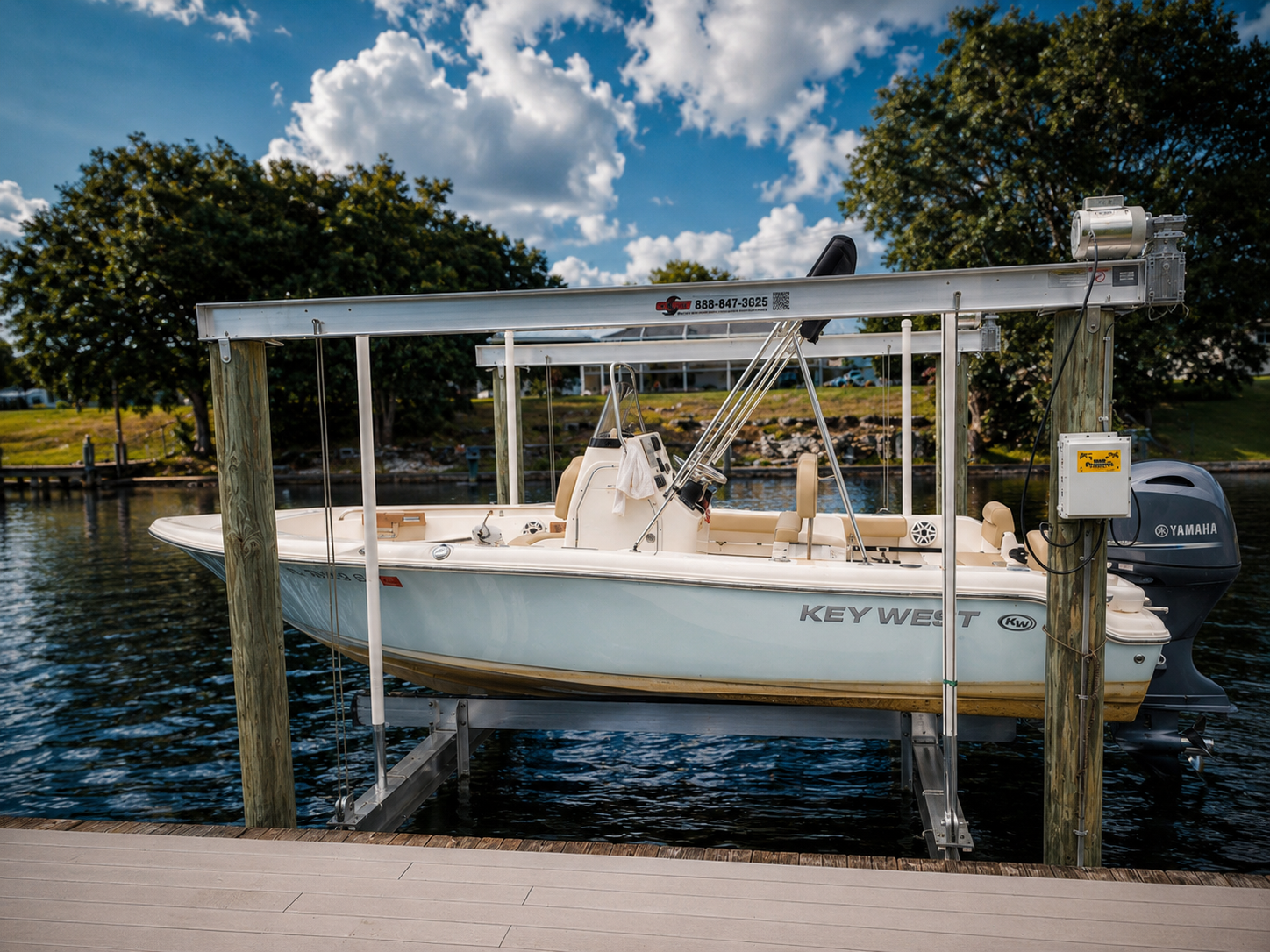
A traditional boat lift is a widely recognized system in the marine industry. It features a horizontal overhead beam spanning between two or more pilings, creating a framework that supports the lift assembly.
Its long history of use and familiarity among residential and commercial waterfronts have made it a widely adopted solution for boat storage and protection.
How Does a Traditional Boat Lift Work?
A traditional boat lift uses a motorized cable system that runs across the overhead beam. As the system operates, the cables move the cradle or bunks vertically, allowing the boat to be raised for storage or lowered back into the water for use.
The overhead beam serves as the central support structure for this lifting mechanism.
Key Design Differences
Before comparing performance, durability, and long-term value, it’s helpful to understand how these two lift designs differ at a structural level. While both serve the same purpose, their layouts influence dock integration and aesthetics.
Structural Design
The most obvious difference between a beamless boat lift vs traditional boat lift is the overhead beam itself. Traditional boat lifts rely on that top beam as the structural anchor point for the entire cable system. Beamless lifts shift that load to the vertical piling structure, eliminating the crossbar.
Dock Space Usage
Without an overhead beam, beamless lifts create an open slip with additional overhead clearance. This can be an advantage on tighter docks where space is limited. Traditional boat lifts use a crossbeam above the slip, making them better suited to layouts where overhead clearance is not a primary concern.
Aesthetic Appeal
Beamless boat lifts have a noticeably cleaner, more streamlined appearance. Traditional boat lifts expose more of the mechanical structure, which isn’t necessarily a drawback, but if you are focused on curb appeal or modern waterfront aesthetics, the difference is clear.
Performance Comparison
While design influences how a lift fits your dock, performance determines how it handles the demands of everyday use. Looking beyond appearance reveals which system is better suited to your boating needs and waterfront conditions.
Strength and Load Capacity
Traditional boat lifts have a well-established track record for handling heavy loads. Their beam-and-cable configuration has been tested over decades across a wide range of boat sizes.
Beamless lifts are strong, but their capacity depends on the quality of engineering behind them, which varies by manufacturer. For large or heavy vessels, many buyers lean toward traditional boat lifts because of their proven load history.
Stability and Reliability
Both systems perform well when installed correctly and maintained consistently. The bigger factor in long-term reliability is the quality of installation and how diligently routine maintenance gets done.
Hurricane Resistance
In Florida, storm resistance is a key factor in evaluating any boat lift system. Traditional boat lifts have a track record in hurricane-prone coastal environments, and their structural simplicity makes them easier to inspect and reinforce before a storm.
Beamless systems are improving rapidly with modern engineering, but traditional lifts carry long-term storm data behind them. If you reside in Florida, consider how each system is designed to handle hurricanes, storm surge, and prolonged exposure to coastal conditions.
Space Efficiency
Space requirements vary significantly depending on your dock layout and available clearance.
Without an overhead beam, beamless boat lifts create an open slip and maximize usable space above the dock. This can be especially beneficial for narrow slips, compact canals, and waterfront properties where clearance is limited.
Traditional boat lifts occupy more overhead space because of their crossbeam design, but they remain a practical option for larger docks where space constraints are less of a concern. If maximizing dock space is your priority, a beamless lift is the practical solution.
Installation Flexibility
Beamless boat lifts are well-suited for custom dock builds and design-forward waterfront projects. Their open-top structure adapts well to non-standard layouts and pairs cleanly with modern dock architecture.
Traditional boat lifts remain highly compatible with existing dock structures. Because they’ve been the industry standard for decades, replacement parts are widely available, and most marine technicians are familiar with servicing them.
Durability in Saltwater Environments
Florida’s saltwater environment is relentless. Corrosion, UV exposure, and storm activity put constant pressure on any marine structure. Traditional boat lifts have decades of performance data in these exact conditions, and operators and installers know their weaknesses and how to address them.
Beamless lifts are newer to this environment, but manufacturers are closing that gap quickly with advanced coatings and corrosion-resistant materials. Regardless of which system you choose, consistent maintenance is the single biggest factor in long-term durability.
Cost Comparison
Pricing varies based on lift capacity, installation requirements, materials, dock conditions, and site-specific factors. The total investment will depend on the type of vessel being lifted and the complexity of the installation.
Generally, beamless boat lifts are considered a more specialized solution because of their engineering and design requirements. Traditional boat lifts often offer a wider range of options and may be a practical choice for homeowners seeking a proven, widely available system.
When evaluating costs, it is important to consider not only the initial installation but also long-term factors such as maintenance requirements, durability, compatibility with your dock, and how well the system meets your boating needs.
This removes all dollar figures while still giving readers useful context. It also helps future-proof the article since pricing can vary significantly by market and change over time.
Which Boat Lift Is Better?
For docks where space is limited, overhead clearance is tight, or waterfront aesthetics are a priority, a beamless boat lift is the better fit. Its open design maximizes usable dock space while maintaining a clean, modern appearance.
Traditional boat lifts are the go-to for heavier vessels, budget-conscious buyers, and larger dock spaces where overhead clearance isn’t a concern. Their widespread availability and proven track record make them a dependable default across a wide range of applications.
Choose the Right Lift and Install It with Confidence
When comparing a beamless boat lift vs traditional boat lift, the answer isn’t one-size-fits-all.
Beamless lifts win on space efficiency and modern design, and traditional lifts are preferred for their proven durability, heavy-load capability, and overall affordability. The best boat lift system depends on your dock size, budget, boat, and how much weight you place on aesthetics versus legacy performance.
If you’re in Florida’s coastal environment, both options require thoughtful installation and consistent maintenance to perform at their best. That’s where Hurricane Boat Lifts can help you.
We have been engineering and manufacturing boat lift systems since 1998, with a full lineup that includes beamless lifts, cradle lifts, elevator lifts, and more, which are built for Florida’s demanding saltwater and storm conditions.
Whether you’re upgrading an existing dock or starting fresh, our team can help you find the right fit. Contact us today to explore your options and invest in a boat lift system built to perform for years to come.