Skip to content

Most first-time boat buyers spend months researching brands, engine sizes, and onboard features, but very little time thinking about where the boat will actually live. That oversight can become one of the most expensive mistakes in the entire ownership process.
Boat ownership involves strategic storage planning, dock readiness, maintenance expectations, and protecting your vessel from environmental exposure. The Journal of Marine Science and Engineering notes that boating and marina activities can contribute to maintenance and environmental challenges when vessels are not properly managed or stored.
Without a comprehensive boat buying guide to steer you in the right direction, you may face unexpected dock modifications, higher maintenance costs, or accelerated wear caused by prolonged water exposure and improper storage.
Whether you own waterfront property or are simply exploring your options, using a thorough boat-buying checklist and planning ahead can save significant money and reduce stress later. In many cases, choosing the right boat lift before buying a boat is one of the smartest decisions a future owner can make.
In this blog, we’ll cover:
- Why there’s more that goes into boat ownership than the purchase price.
- Do you need to buy a lift before you buy a boat?
- How to prepare a dock for a new boat and understand boat dock requirements.
- What types of boat storage solutions are best for your boat and home.
Why Boat Ownership Is More Than Just Buying a Boat
Many people think that the only cost of boat ownership is the boat itself, but that couldn’t be further from the truth.
The Hidden Costs Most Buyers Don’t Expect
A boat purchase is only the beginning of the investment. Many first-time buyers underestimate the additional costs that come with ownership, including:
- Dock modifications and reinforcement to meet structural demands
- Long-term boat storage planning
- Hull cleaning and ongoing fiberglass maintenance
- Insurance requirements tied directly to storage conditions
- Electrical upgrades for mechanical lift systems
If your dock can’t safely support your boat or a future lift, you may end up paying far more after the purchase than expected. Incorporating these factors into your initial first-time boat owner tips will save you from major financial headaches down the road.
Why Storage Planning Is Often Ignored
Excitement around buying a boat often pushes practical planning into the background. Many buyers focus only on style, horsepower, accessories, and financing options.
Unfortunately, boat storage planning usually comes later, when installation limitations or maintenance problems begin appearing. Many owners also underestimate how much saltwater, UV exposure, algae, and rough water conditions can impact a boat left in the water full-time.
Do You Need a Boat Lift Before Buying a Boat?
Knowing where to start with a boat lift can be difficult if you’ve never navigated the process before.
Situations Where You DON’T Need One Immediately
Not every boat owner needs a lift right away. You may be fine delaying installation if you:
- Use dry storage facilities
- Primarily trailer your boat to public ramps
- Plan to keep the boat temporarily at a commercial marina
- Boat only occasionally
Situations Where You SHOULD Plan for a Lift Early
Planning early becomes much more important if you own waterfront property, boat frequently, live in a saltwater environment, or are purchasing a higher-value boat.
For these owners, cross-referencing your buying a boat checklist with your dock’s layout should happen before finalizing the purchase. Matching the dock, lift capacity, and boat dimensions early helps prevent future compatibility problems.
How to Prepare Your Dock for a New Boat
Whether you plan to install a high-capacity mechanical lift immediately or tie up directly to slip pilings for the season, your dock must be thoroughly audited and upgraded to handle the new physical and logistical demands. Taking a proactive approach prevents structural failure, protects your hull from environmental damage, and guarantees your electrical grid can handle the load.
The following procedural steps outline exactly how to transition your dock into a highly functional, safe home port while meeting all necessary boat dock requirements.
1. Measure Dynamic Water Depth
Don’t rely on a single visual check of the water level. Use a weighted measuring tape or a handheld sonar depth finder to log the exact mudline-to-waterline depth at dead low tide. Furthermore, look up historical data for seasonal low waters or blowout tides driven by strong offshore winds.
Your vessel needs a minimum of 12 inches of clearance between its lowest draft point (with outdrives trimmed down) and the seabed to prevent sucking silt or debris into the raw-water cooling intakes.
2. Verify Structural Integrity
Physically inspect your dock’s foundational pilings and the adjacent seawall.
For wood pilings, use a blunt metal probe to check for marine borer damage or rot just below the high-water mark. If you have concrete pilings or a concrete seawall, inspect for structural spalling, which is cracking that exposes rusting steel rebar inside.
A professional marine contractor should verify that the dock’s framing can handle both the increased lateral pulling force of a heavier moored vessel during a storm and the deadweight of any future lift hardware.
3. Audit the Utility Grid & Upgrade to GFCI
Modern boat lifts utilize heavy-duty electric motors (typically 120V or 240V, ranging from 0.75 to 2 horsepower) that require dedicated, stable power. Hire a licensed marine electrician to run heavy-gauge marine-grade wiring out to the slip.
You must install a dedicated sub-panel equipped with Ground Fault Circuit Interrupter (GFCI) breakers rated for wet locations. This allows the lift motors, dock lighting, and battery tenders to operate safely without tripping under high startup surges or risking dangerous current leakage into the surrounding water.
4. Optimize Mooring Cleats & Load Zones
Never bolt new, larger mooring cleats directly into aging dock deck boards. Upgrading to a larger boat requires backing your hardware properly. Remove old, undersized cleats and install heavy-duty 10-to-12-inch marine-grade stainless steel or hot-dipped galvanized cleats.
Every cleat must be through-bolted directly into the main structural stringers or structural joists beneath the decking. Always use thick backing plates made of stainless steel or marine-grade starboard to distribute the immense shock load generated when wind and wakes pull against the vessel.
5. Install Dynamic Hull Protection
Before the boat arrives, configure the slip’s physical defense network based on your local water motion. If your dock faces a narrow canal with frequent wake action or high wind exposure, standard hanging vinyl fenders are rarely enough.
Mount permanent, heavy-duty vertical dock bumpers or PVC rub-rails along the high-impact piling faces. For tight slips or areas with severe tidal changes, install fiberglass mooring whips or a spring-line tracking system to actively push the boat away from the dock structure, absorbing kinetic energy before the hull can collide with the wood framing.
Why Boat Lift Planning Should Come Before Boat Purchase
Investing in a boat is a major milestone, but seasoned maritime experts will tell you that the vessel itself is only half of the equation. To truly protect your investment, planning for how you will store and maintain the craft is just as critical as choosing the make and model.
One of the most common pitfalls for first-time buyers is treating the boat lift as an afterthought. By reversing the process, you can avoid catastrophic structural failures, save thousands in retrofitting costs, and guarantee a seamless waterfront experience.
Matching Boat Size with Lift Capacity
Selecting a boat before understanding the engineering limitations of a lift is a fundamental error in waterfront planning. A lift’s capacity is a rigid structural boundary determined by the laws of physics and marine engineering.
When calculating the necessary lift size, buyers must look far beyond the dry weight listed on a manufacturer’s spec sheet. Real-world lift capacity must account for a fully loaded vessel, which includes maximum fuel capacity, full water tanks, multiple heavy-duty marine batteries, and hundreds of pounds of gear, coolers, and equipment.
The physical dimensions of the hull dictate how the boat sits on the lift cradles. Attempting to force a boat onto a lift that lacks the appropriate capacity or width introduces severe safety hazards, placing immense stress on the cables, motors, and the underlying dock structure itself.
For long-term safety and operational peace of mind, homeowners should always engineer a generous safety margin into their lift selection rather than maxing out exact capacities.
Avoiding Costly Retrofitting Later
When lift planning is delayed until after a boat is sitting at the slip, homeowners routinely face the painful reality of retrofitting. Modifying an existing dock to accommodate an unplanned boat and lift combination is an incredibly expensive endeavor.
Buyers are often shocked to learn that retrofitting can require extensive dock reconstruction, driving new pilings to handle increased load-bearing demands, and completely reworking the electrical infrastructure to supply adequate power to heavy-duty lift motors.
In some worst-case scenarios, an incompatible setup may require scrapping a new lift entirely for an oversized replacement. Incorporating the lift into your initial buying strategy mitigates these unnecessary expenses.
Early planning grants you the flexibility to design a cohesive waterfront system from the ground up, allowing you to select a lift that integrates flawlessly with your dock’s existing structural blueprint.
Determining Your Future Lift Needs
Boat lifts are highly engineered systems tailored to specific maritime variables, meaning they are far from a one-size-fits-all solution. To accurately size a lift, a buyer must map out a matrix of technical details. The overall length of the vessel, its hull configuration (such as a deep-V, catamaran, or pontoon), the weight of the engines, and total fuel and fluid capacities all dictate the style of lift required.
However, savvy buyers also look toward the future. A golden rule among experienced mariners is to think beyond your current purchase, as a significant percentage of boat owners choose to upgrade to a larger vessel within just a few years.
By anticipating this natural progression during the initial planning phase, you can invest in a flexible, slightly oversized lift system. This proactive foresight prevents you from outgrowing your infrastructure, saving you from a complete system replacement when it comes time to trade up for more horsepower or a wider beam.
Evaluating Dock Support and Structural Integrity
Possessing a private dock doesn’t automatically guarantee it can support the immense mechanical stress of a boat lift. A comprehensive structural evaluation is a non-negotiable step before any installation can begin.
Marine contractors must carefully inspect the integrity of the seawall, verify piling stability, and evaluate the anchoring systems to make sure they can withstand both the downward gravitational pull of the loaded lift and the lateral forces of wind and currents.
Managing Physical and Environmental Space Constraints
Beyond structural strength, space is a premium commodity on the water. Boat lifts require a significantly larger footprint than many first-time buyers realize. In addition to housing the physical frame and hardware of the lift system, your slip must accommodate safe boarding access, proper dock clearance, and adequate maneuvering space for docking under adverse conditions.
Tight, poorly planned installations leave zero margin for error, drastically increasing the risk of hull collisions against pilings or the lift frame during high winds or strong currents. Safe operation also requires accounting for environmental dynamics.
Your layout must provide clear tolerances for side-to-side vessel movement, extreme tidal or seasonal water fluctuations, and the constant action of wakes and waves. There needs to be plenty of room for boarding walkways and emergency access to protect your passengers and shield both the boat and the dock from structural friction and impact damage.
Common First-Time Boat Buying Pitfalls
The excitement of purchasing a new boat frequently blinds buyers to the logistical realities of ownership. The most damaging error is ignoring storage planning until after signing the paperwork.
This oversight regularly leads to severe dock incompatibility, forcing owners into limited, subpar lift options or saddling them with skyrocketing maintenance costs. Storage and lift compatibility should always be top-tier priorities on any pre-purchase checklist.
Even if a boat physically fits within the geographical footprint of a slip, it can still trigger catastrophic operational issues if it mismatches the lift’s engineering. Weight distribution anomalies, hull shape conflicts, and beam width limitations can render a lift useless.
Furthermore, buyers often overlook the hidden costs of failing to use a lift. Leaving a vessel submerged full-time exposes the hull to relentless marine growth, blistering, corrosion, and saltwater degradation.
Utilizing a properly matched lift dramatically curtails these long-term cleaning and repair expenses, preserving both the aesthetic beauty and resale value of your craft.
The Financial Reality of Retrofitting vs. Proactive Planning
From a financial perspective, the difference between reactive retrofitting and proactive planning is stark. Adding a lift as an afterthought inherently drives up labor and material costs. Because marine contractors must work around an established dock configuration and a pre-purchased boat, they are forced to adapt the environment to the equipment, rather than engineering the ideal setup from scratch.
This often leads to emergency electrical upgrades to support lift power draws and expensive structural adjustments that could have been avoided with a bit of foresight.
Ultimately, early planning is an exercise in asset protection and fiscal responsibility. By aligning your boat purchase with your lift and dock capabilities from day one, you eliminate the need for structural reconstruction, so you buy the correct equipment the first time, and simplify the installation process for your contractors.
Investing a little time into infrastructure planning up front guarantees a safer, more durable, and significantly less expensive waterfront lifestyle for years to come.
What Type of Boat Storage Is Best for Waterfront Homes?
If you own a waterfront home, you need to weigh multiple boat storage solutions to see which one best fits your lifestyle and property layout.
Wet Slip Storage
Wet slips offer convenience and quick water access, but they also expose boats to constant water contact. This leads to higher maintenance demands, organic marine growth, and hull blistering over time.
Dry Storage
Off-site dry storage facilities reduce water exposure and maintenance, but they limit immediate access to your vessel. You are bound by their operating hours, scheduling rules, and seasonal availability.
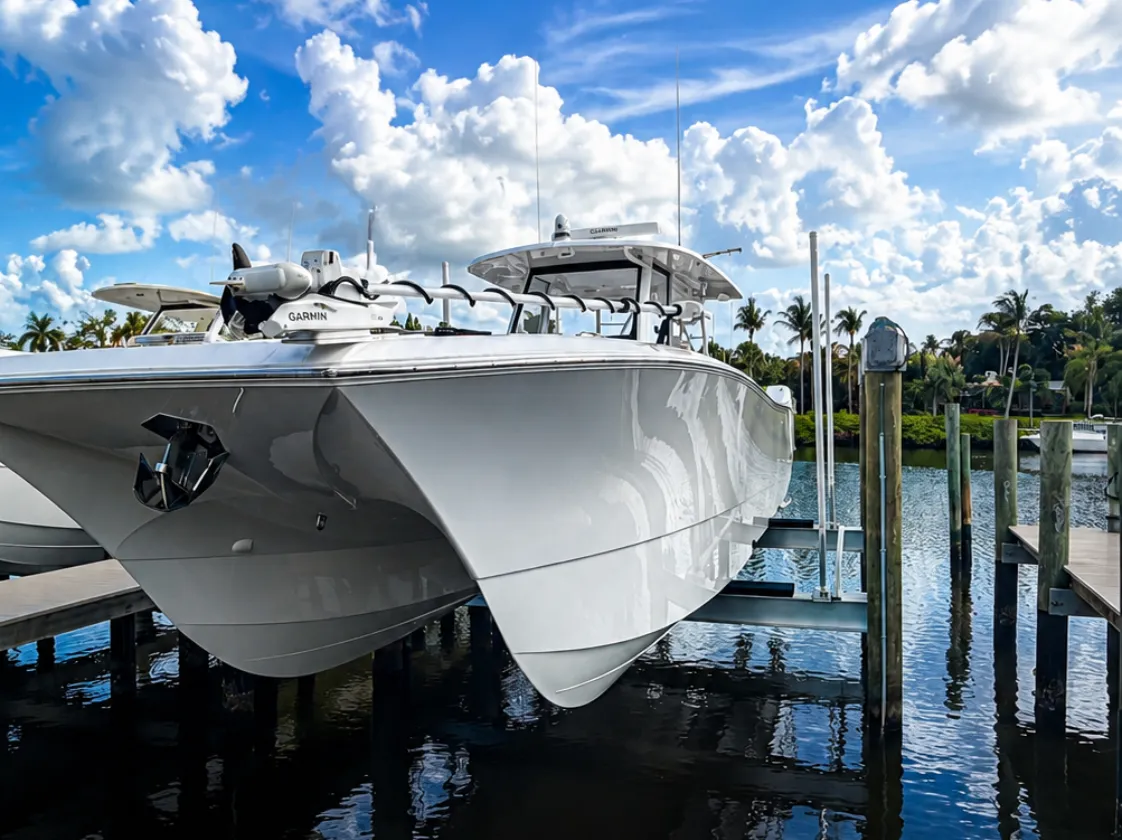
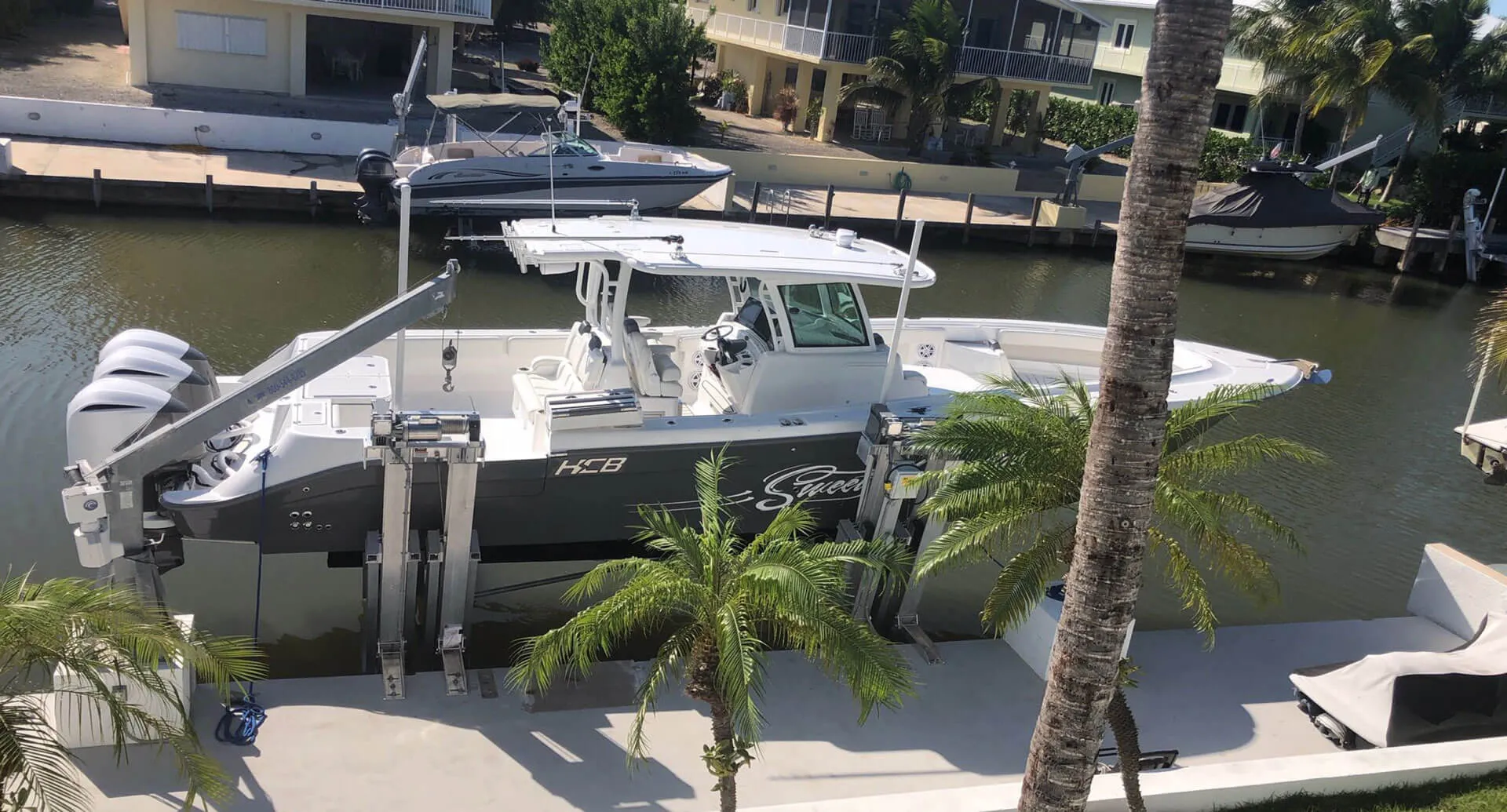
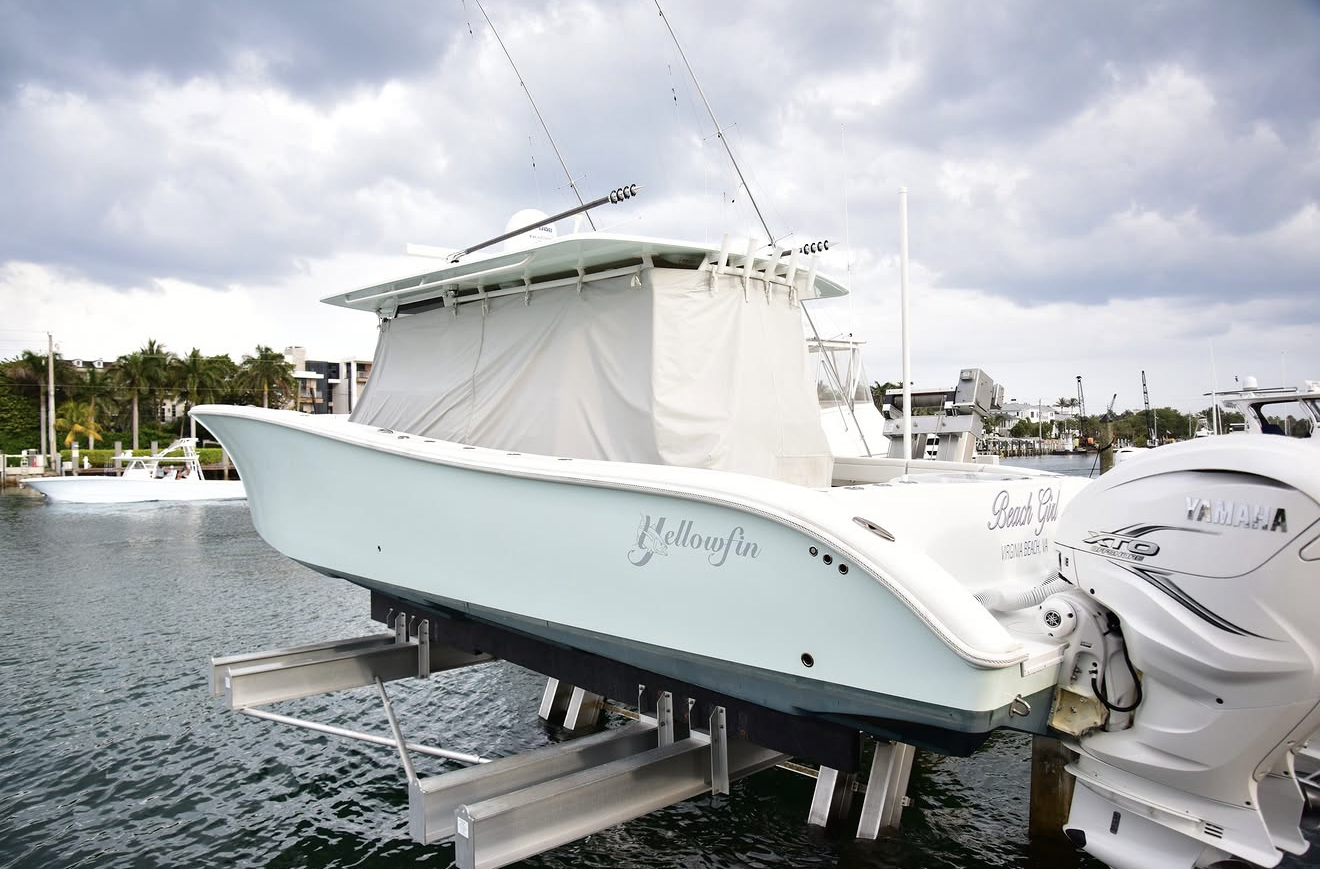
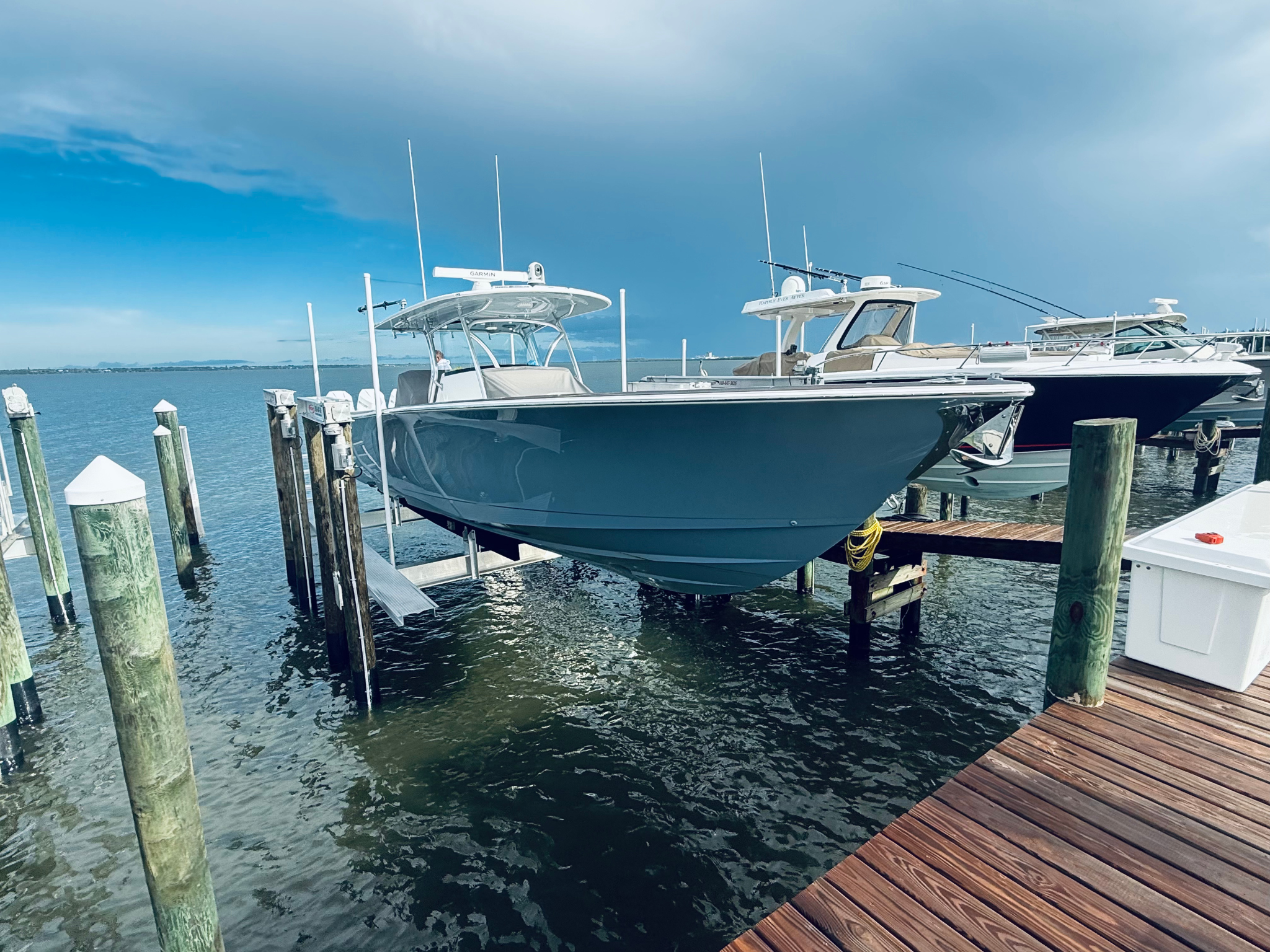
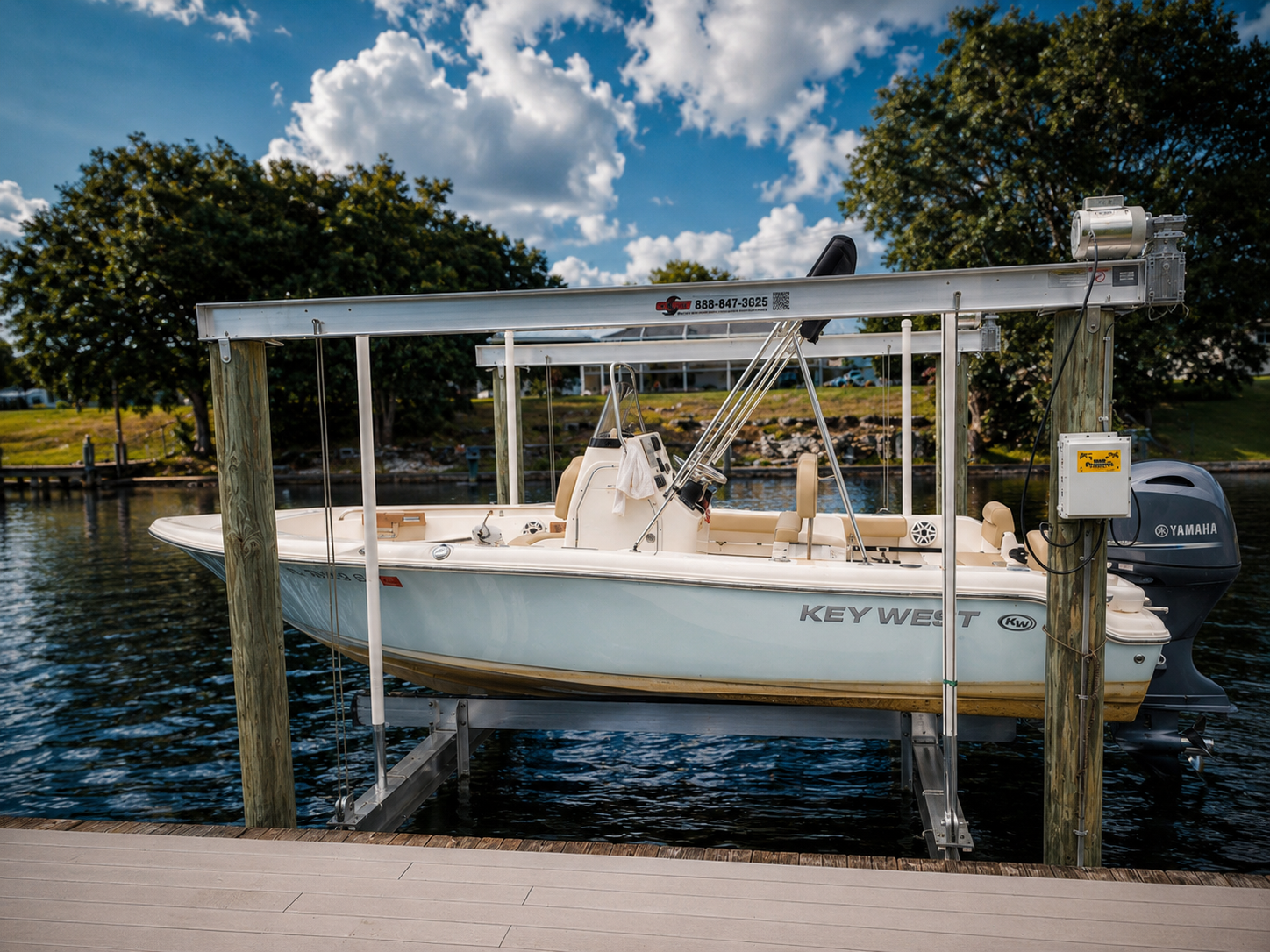
Boat Lifts (The Preferred Long-Term Solution)
For most waterfront homeowners, mechanical boat lifts offer the ultimate balance of convenience and protection. The core benefits include:
- Elimination of hull damage from constant submersion.
- Zero marine growth or barnacle accumulation.
- Easier cleaning, flushing, and detailing.
- Seamless storm and high-water preparation.
- Greatly improved long-term resale value for the vessel.
Modern engineering allows these systems to support everything from heavy-duty recreational vessels to specialized personal watercraft boat lifts.
Personal Watercraft and Small Boat Considerations
Don’t assume that smaller vessels exempt you from proper mooring planning. Jet skis, wave runners, and small tenders require specialized care to maintain their performance.
Why PWCs Need Storage Planning Too
Leaving a PWC floating in a wet slip continuously increases the risk of hull staining, intake clogging from marine debris, and corrosion of sensitive mechanical components. Proper storage planning is just as essential for these smaller watercraft.
Benefits of Dedicated PWC Lifts
Investing in dedicated personal watercraft boat lifts provides distinct operational advantages:
- Effortless, push-button launching and retrieval.
- Superior space efficiency along your existing dock.
- Complete protection from wake damage and hull friction.
- Improved dock organization and safety.
These specialized systems maximize your usable waterfront layout, especially for properties with limited dock space.
Frequently Asked Questions (People Also Ask)
1. Do I need a boat lift before buying a boat?
Establishing a concrete storage plan prior to buying is highly recommended for any waterfront homeowner. Pre-planning your lift setup allows you to align the engineering limitations of the lift directly with the physical specifications of the vessel you choose.
2. Can a dock support any type of boat lift?
No, docks are engineered for specific load capacities and environmental conditions, meaning they can’t universally support every type of lift configuration on the market. Crucial factors such as the structural stability of the underlying pilings, the degradation rate of the decking materials, and the structural condition of the adjacent seawall all dictate what kind of weight can be safely suspended.
3. How much space is needed for a boat lift installation?
The exact space required varies wildly depending on your vessel’s dimensions, but you must always look far beyond the basic beam width of the boat itself. A proper installation requires substantial clearance to accommodate the heavy structural steel or aluminum lift frame, along with a safe physical buffer zone to prevent the hull from scraping pilings during wind-driven approaches.
4. What are common mistakes first-time boat buyers make?
The most prevalent error among first-time boat buyers is focusing entirely on the emotional thrill of the vessel while treating long-term storage and mooring logistics as an afterthought. Many new owners catastrophically underestimate the ongoing financial toll of routine hull maintenance and the accelerated deterioration that occurs when a boat is left continuously submerged in saltwater.
Protect and Preserve Your Boating Investment
Buying a boat is exciting, but smart ownership starts long before the vessel arrives at your dock. By utilizing our comprehensive boat buying guide, reviewing crucial first-time boat owner tips, and mapping out your boat storage solutions early, you can avoid expensive surprises down the road.
Whether you own a large recreational cruiser or need specialized personal watercraft boat lifts, the right infrastructure protects your investment and simplifies ownership for years to come.
At Hurricane Boat Lifts, we help protect and preserve your investment so you can enjoy hassle-free boating. Contact us today to learn how we can help upgrade your waterfront property.