Skip to content


Choosing the right boat lift rarely comes down to size alone. The real question is how the lift will be used, how much weight it carries, and what conditions surround it. Along the waterfronts of Sarasota, Florida, those factors can make all the difference.
A private homeowner protecting one boat has very different needs from a marina cycling dozens of vessels each day. That’s where the difference between commercial and residential boat lifts becomes important. Load capacity, usage frequency, durability, and property type all help determine the right fit. Get it wrong, and you could end up paying for capacity you never use, or putting too much strain on a lift that wasn’t designed for the job.
This guide breaks down the practical differences between the two. It also includes a side-by-side comparison, real-world property examples, and common mistakes to avoid.
Understanding the Basic Difference
Before comparing specs, it helps to define what each lift is designed to do. The gap between them is about purpose, not just scale.
What Is a Residential Boat Lift?
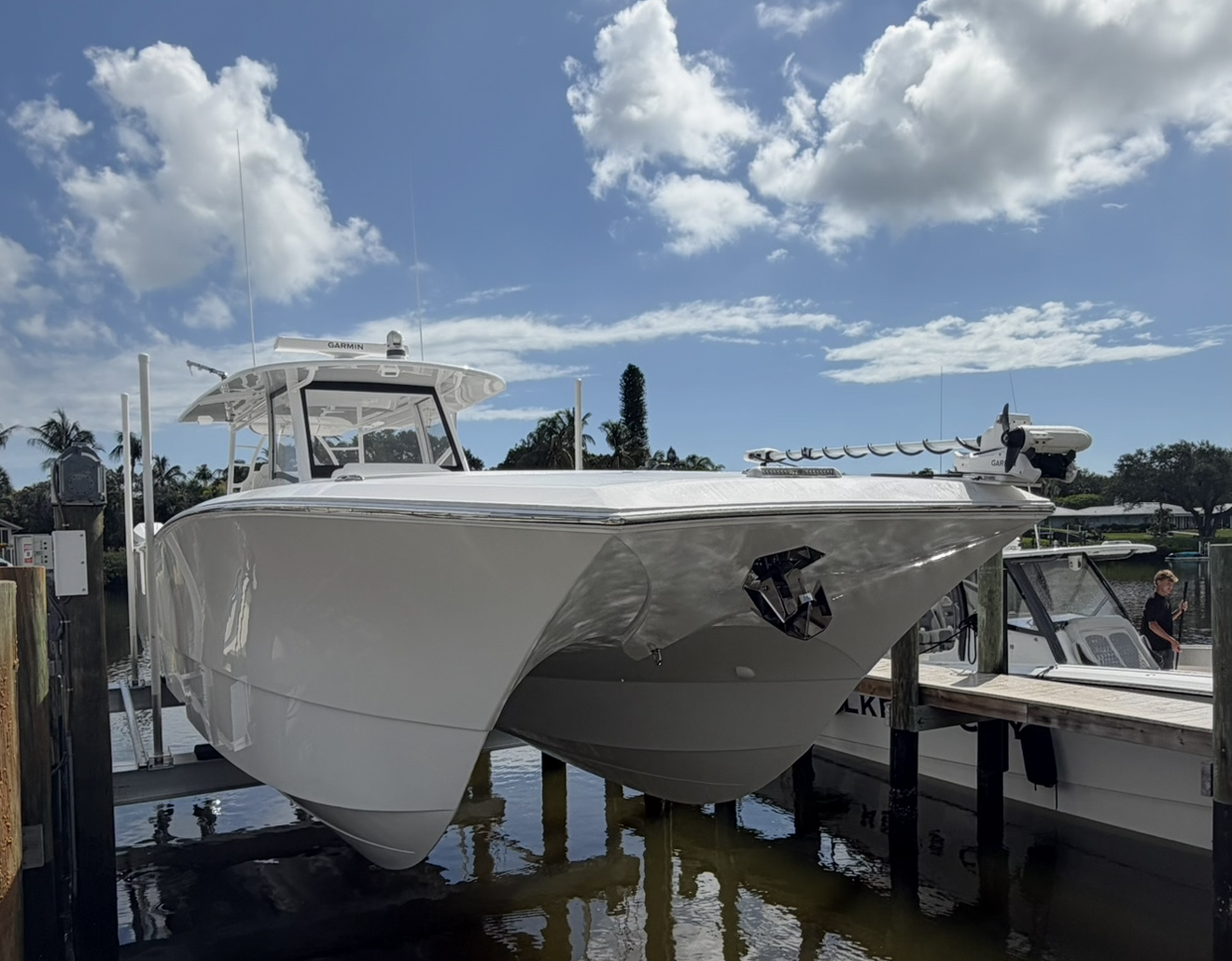
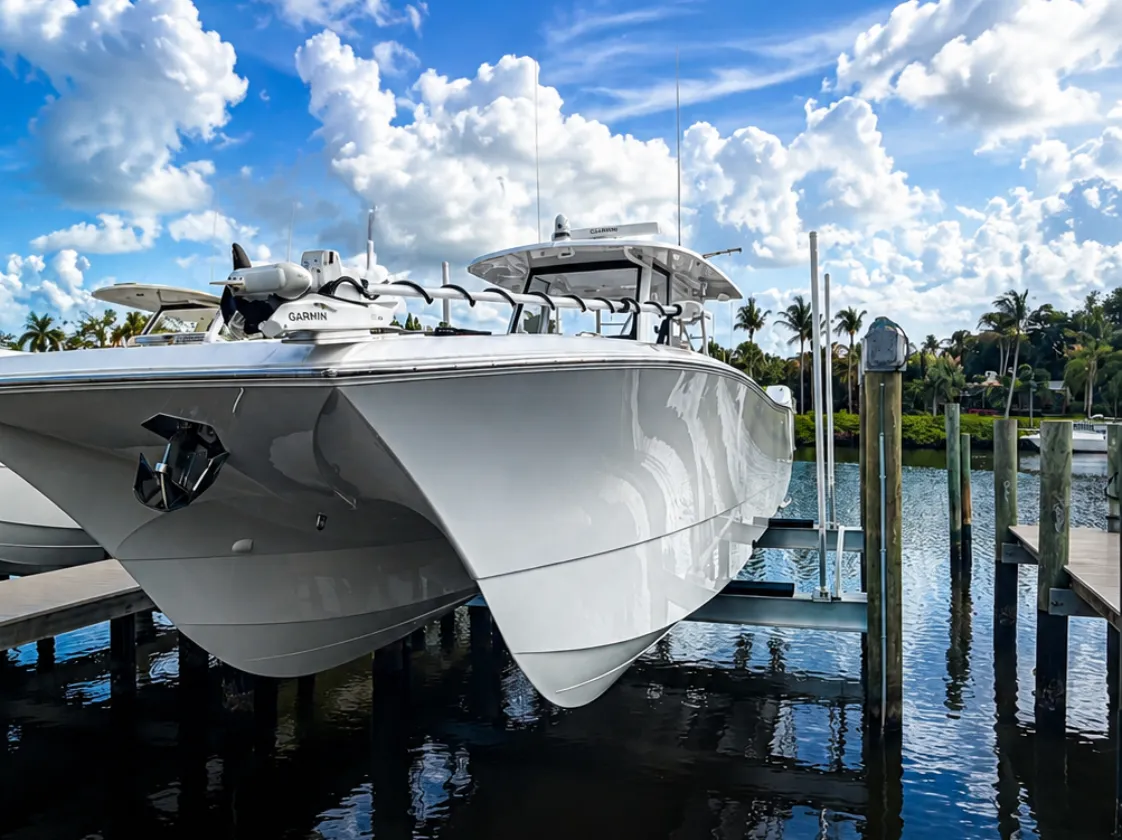
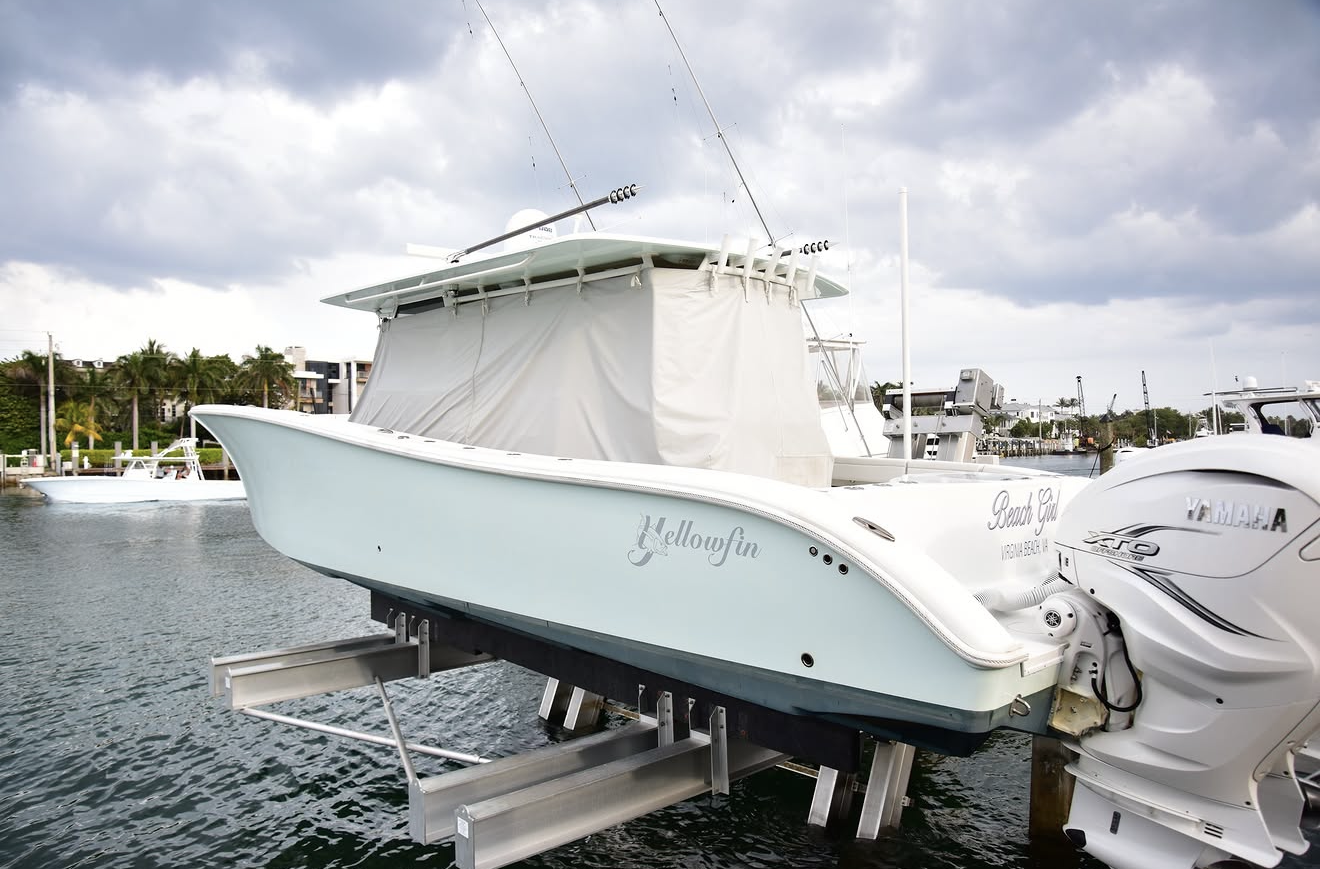
A residential boat lift serves a single boat on a private dock. Homeowners can explore cradle boat lift systems for private waterfront applications. Homeowners want convenience, corrosion protection, and reliable daily operation for one vessel. These lifts are sized for personal use, whether that boat is a center console, a pontoon, or a personal watercraft.
Priorities here center on protecting a family’s investment from tides, storms, and marine growth. Usage is usually occasional, tied to weekends and seasonal trips.
What Is a Commercial Boat Lift?
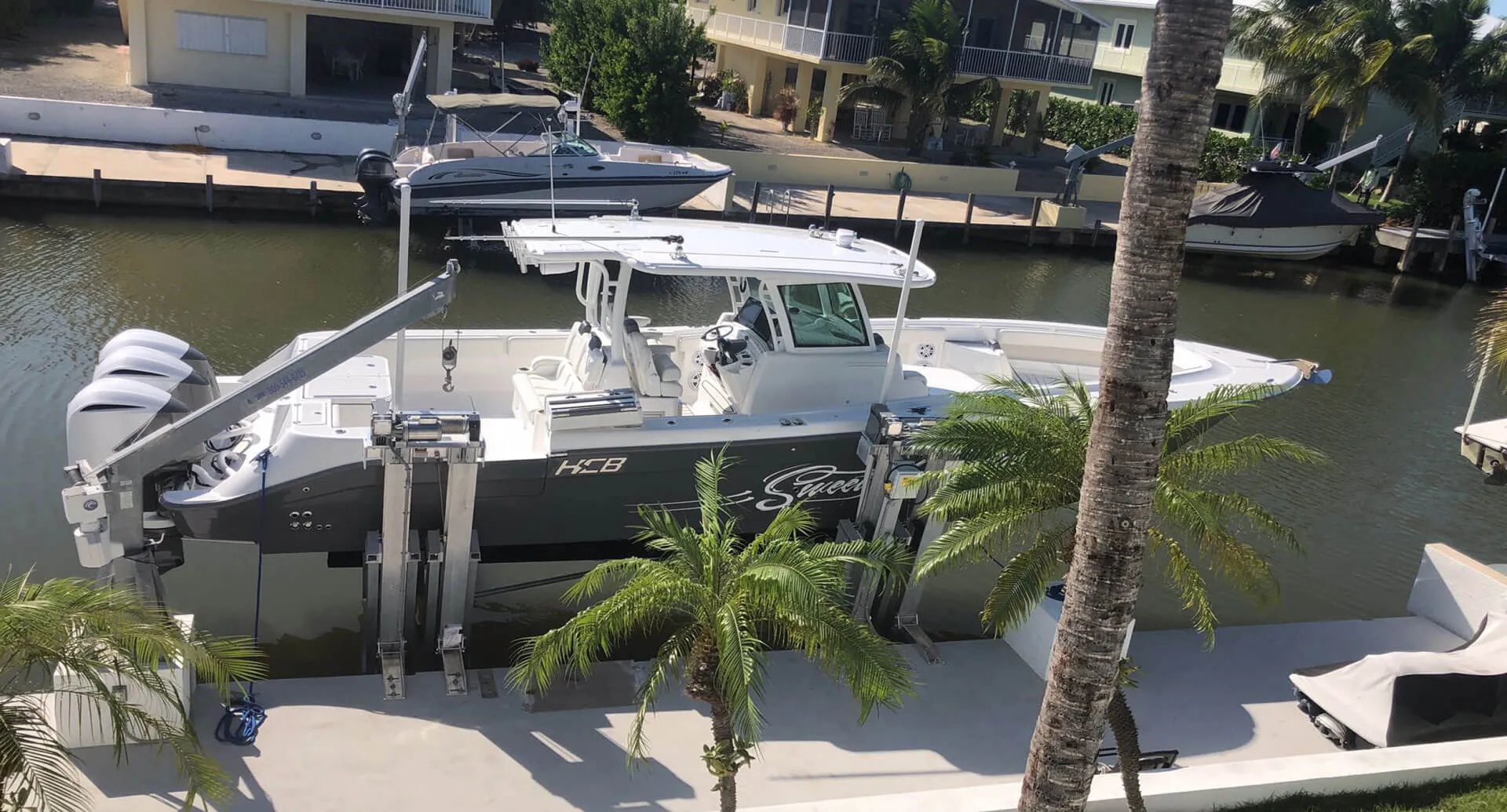
A commercial boat lift is engineered for higher frequency, heavier loads, and multi-user environments. These lifts run through far more cycles and carry a wider range of vessel weights. Marinas, boat clubs, charter operations, and homeowner association docks all rely on them. A well-specified commercial boat lift system pairs a reinforced frame with the right motors and accessories for constant duty.
Where a residential model rests most of the week, a commercial unit may lift and lower boats several times a day. That demand calls for reinforced construction and materials rated for constant duty. For busy marinas and shared docks, high-traffic waterfront properties require lift systems built for repeated use.
Property managers weighing a large commercial lift boat setup start with the load rating and the number of slips involved. This breakdown of choosing lifts for high-traffic waterfront properties covers that sizing process step by step.
Commercial vs. Residential Boat Lifts: Side-by-Side Comparison
The table below maps the key decision factors across both lift types. Use it as a quick reference before reading the detailed factors that follow.
| Factor | Residential Boat Lift | Commercial Boat Lift |
| Typical application | Private docks, single-family waterfront homes | Marinas, HOAs, rental/charter operations, public docks |
| Usage frequency | Occasional/personal use | Frequent, high-cycle, sometimes daily |
| Capacity requirements | Lighter vessel loads | Higher and heavier load ratings |
| Boat size | Personal boats, PWCs, smaller vessels | Larger vessels and mixed fleets |
| Durability | Standard-duty for personal use | Heavy-duty for demanding conditions |
| Construction/materials | Corrosion-resistant, sized for private use | Reinforced, marine-grade for heavy cycling |
| Maintenance | Lower frequency, homeowner-managed | Scheduled, higher-touch, professional service |
| Installation | Simpler, single-slip installs | Engineered, often multi-slip or custom |
| Cost considerations | Lower upfront investment | Higher upfront, judged on ROI/uptime |
| Best suited for | Individual waterfront homeowners | Marinas, HOAs, commercial operators |
How to Choose: Key Deciding Factors
Nine factors drive the decision. Reviewing each one in order usually reveals the right answer.
1. Weight and Capacity Requirements
Capacity is the first filter, and it decides everything downstream. A lift rated below the true load risks failure and damage.
The number should reflect fully loaded weight, not the dry weight printed in a brochure. Fuel, water, gear, engines, and passengers all add pounds.
A common guideline is to size well above the boat’s dry weight, leaving a safety margin. For heavy-duty boat lift needs at marinas and clubs, that margin grows to cover mixed fleets and the heaviest vessel on the dock.
2. Usage Frequency and Cycle Load
A homeowner may cycle a lift a few times a week. A marina lift can run through many cycles a day.
Frequency drives durability, motor selection, and material grade more than any single spec. Higher cycle counts wear components faster.
That is why commercial units use stronger drives and reinforced frames designed for constant motion.
3. Boat Size and Vessel Type
A single boat on a private dock points toward residential. Mixed fleets, rotating rentals, or larger vessels point toward commercial.
If several different boats use the same lift, capacity and adjustability both become priorities.
4. Property Type
Property type usually settles the debate on its own. A private residence with one boat fits a residential lift.
A shared or income-producing waterfront points to commercial. HOA docks and marinas carry shared-use volume and liability that residential equipment was never designed for.
The best boat lift for HOA use accounts for many owners, heavy cycling, and public accountability.
5. Dock and Installation Requirements
Load-bearing capacity, piling strength, and dock structure all affect what a site can support. Commercial installs frequently require engineered layouts for multi-slip or high-load use.
Before any work begins, confirm permitting requirements with local authorities. Many Florida counties require permits for both residential and commercial lifts.
Starting without one can trigger a stop-work order. A site assessment early in the process saves costly delays later.
6. Durability and Construction Materials
Saltwater is unforgiving. Marine-grade aluminum and corrosion-resistant components extend service life in coastal water like Sarasota Bay.
Freshwater is gentler, but salt exposure demands higher-grade materials and coatings. Commercial builds are reinforced for heavier-duty cycles.
The added metal and stronger fasteners resist the wear that constant lifting produces.
7. Maintenance Expectations
Residential lifts are usually homeowner-managed with periodic checks. Commercial lifts benefit from scheduled professional servicing because of their higher use.
Correctly chosen commercial boat lift accessories, from motor covers to cradle guides, reduce wear and keep service intervals predictable across a busy season.
8. Safety and Liability
Shared and public use raises the stakes. A failure on a private dock affects one owner.
A failure on a marina or HOA dock affects tenants, guests, and the operator’s liability exposure.
Boating carries real risk overall: in 2023, the U.S. Coast Guard’s Recreational Boating Statistics report recorded 3,844 boating accidents, 564 deaths, and 2,126 injuries, alongside $63 million in property damage.
Commercial operators weigh compliance and risk far more heavily as a result.
9. Cost and Long-Term Value
Sticker price tells only part of the story. Residential lifts cost less upfront.
Commercial lifts cost more but are judged on lifecycle value: uptime, tenant satisfaction, and reduced downtime.
Market conditions also affect timing. NMMA data shows new boat sales fell roughly 9% in 2025 amid a cautious consumer mindset.
That makes protecting the boats already on the water a smarter long-term play.
When a Residential Boat Lift Is the Right Choice
A residential lift fits when the use case stays personal and predictable:
- One boat on a private, single-family dock
- Occasional weekend or seasonal use
- Personal watercraft or a smaller vessel
- A homeowner comfortable with basic upkeep
A waterfront home with a single center console is the classic example. So is a dedicated PWC lift beside a family dock.
When a Commercial Boat Lift Is the Right Choice
A commercial lift fits when use turns frequent, heavy, or shared:
- High cycle counts, sometimes daily
- Heavier loads or mixed fleets
- Shared, public, or income-producing docks
- Elevated liability across multiple users
Common examples include a marina boat lift at a slip-rental operation, an HOA community dock, a boat club, and charter or tour businesses. Restaurant and resort waterfronts fall here too. A large commercial lift boat installation at these sites is frequently the practical next step.
Real-World Property Examples: Matching the Lift to the Property
The property itself can often point you toward the right type of lift. Consider who will use it, how often it will operate, and whether the lift supports one owner or multiple users.
- Waterfront homeowner with one boat: A residential lift is typically the right fit when one owner uses and maintains the equipment for personal boating.
- HOA community dock serving multiple owners: A commercial lift is generally better suited to shared docks where several owners rely on the same equipment and usage is more frequent.
- Marina with slip rentals: Commercial equipment makes sense because lifts may handle multiple vessels and operate throughout the boating season.
- Charter or tour operator: Commercial or heavy-duty equipment is usually the better choice when boats are launched and stored frequently as part of a business.
- Vacation rental with guest boat access: The choice depends on usage volume, vessel size, and liability. Higher turnover or frequent guest use may call for a more durable setup.
The pattern is straightforward: single, personal use generally leans residential, while shared, frequent, or revenue-driven use points toward commercial use. When the situation falls somewhere in between, usage and liability can help determine which option makes the most sense.
Common Mistakes When Choosing Between Commercial and Residential Lifts
A few errors show up repeatedly:
- Sizing to the current boat instead of the heaviest future load
- Ignoring usage frequency when picking a duty rating
- Underestimating shared-use liability at HOA and marina docks
- Choosing on upfront price alone and skipping lifecycle cost
- Overlooking dock and piling structural limits
- Forgetting saltwater corrosion and proper material grade
Frequently Asked Questions
1. What is the difference between a commercial and residential boat lift?
Commercial lifts are built for higher capacity, frequent cycling, and shared or business use, while residential lifts are sized for single-boat private use. The difference comes down to load, duty cycle, and liability rather than size alone.
2. Do I need a commercial boat lift for my marina?
In most marina settings, yes. High usage volume, multiple vessels, and liability exposure all point toward commercial-grade equipment engineered for constant duty.
3. Can a residential boat lift be used for commercial purposes?
It is generally not recommended. Residential lifts aren’t rated for the frequency, load, or liability that commercial use demands, which raises the risk of premature wear and failure.
4. How do I know what capacity boat lift I need?
Base it on the boat’s fully loaded weight, including fuel, water, and gear, plus a safety margin. Never size a lift on dry weight alone.
5. What type of boat lift is best for an HOA community dock?
Commercial or heavy-duty lifts are usually the safest choice. Shared use, higher cycling, and liability concerns all favor reinforced, professionally serviced equipment.
6. Do commercial boat lifts require more maintenance?
They benefit from scheduled professional servicing because of higher use, yet they are engineered for longevity. Regular maintenance protects both the lift and the vessels it carries.
7. Can one property need both a residential and a commercial lift?
Yes, this comes up more than people expect. A vacation rental with a private boat plus guest access, or a small marina with an owner’s personal slip, can need one of each. A site review settles which combination fits.
8. How much does permitting typically add to the installation timeline?
It varies by county, but permitting usually adds a few weeks before installation can begin. Starting the permit process early, alongside the lift selection, keeps the overall project on schedule.
Choosing the Right Boat Lift for Your Property
The choice between commercial and residential boat lifts hinges on four things: load, usage frequency, property type, and liability. Overbuilding wastes money, while underbuilding shortens equipment life and raises risk. The right fit protects both the boat and the budget over the long term.
Hurricane Boat Lifts builds both lift categories around that same durability standard, whether the dock serves one family or an entire marina.
For a professional site and load assessment on a specific dock, reach out to our team.