Skip to content

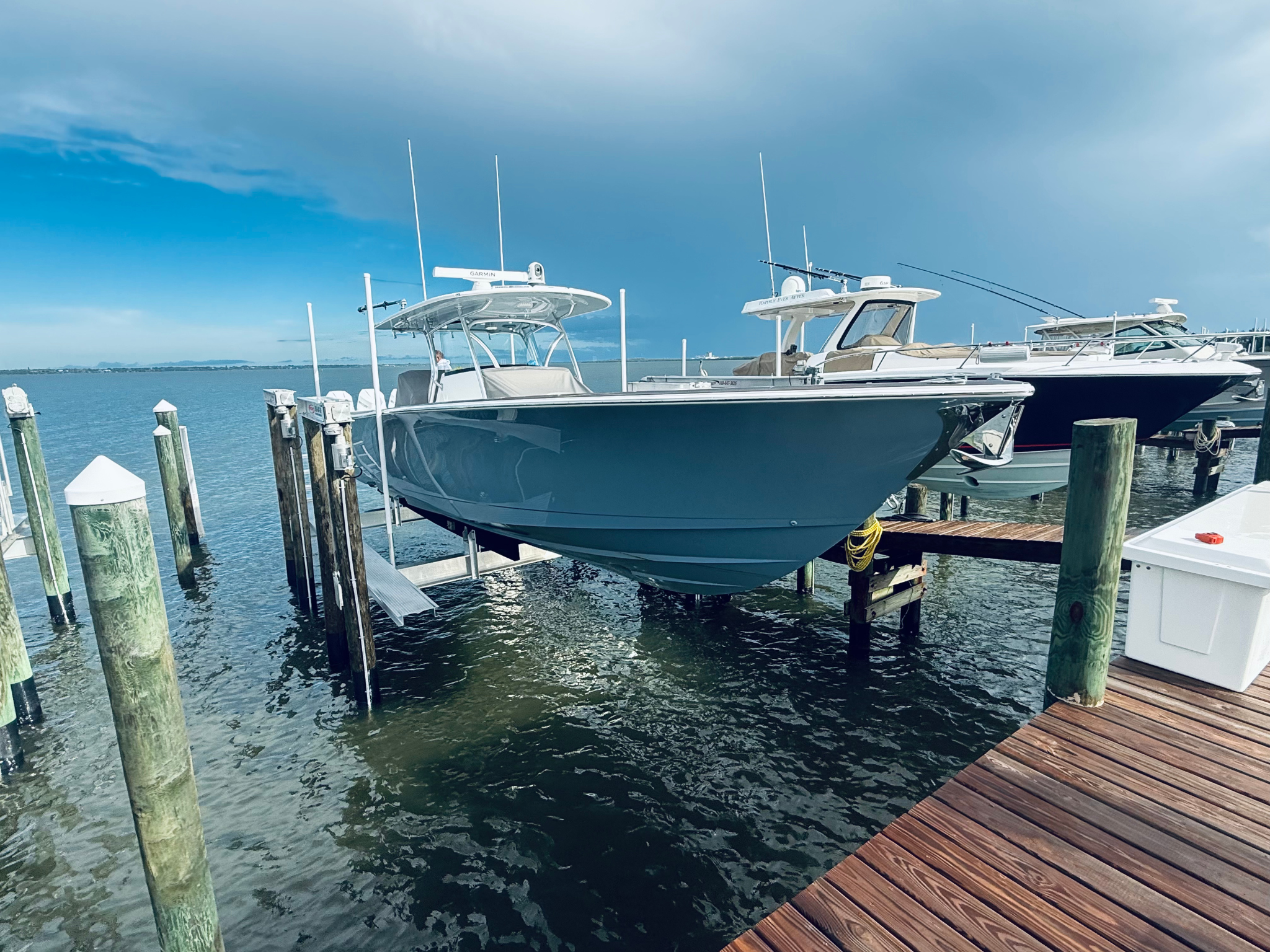
If you’re into the boating lifestyle, you’ll want to make the most out of your marine vessel. Storing an idle boat above water protects it from storms and minimizes the risk of theft and vandalism.
Consequently, investing in boat lifts in South Florida is well worth the cost when considering the additional expense of water-damage-related deterioration.
Since a boat lift system helps maintain your vessel’s appearance and structural integrity, it also helps retain its value. Whether you’re thinking of buying one or you already have a lift and are unsure how it works, you’ll want clear answers to the most common questions about boat lifting systems.
Boat Lift FAQs, Answered
Why do I need a boat lift?
You need a boat lift to protect your vessel from water damage, algae buildup, and storm surge while deterring theft and vandalism. Whether you own a fishing boat or a yacht, keeping it dry and secure helps preserve its resale value.
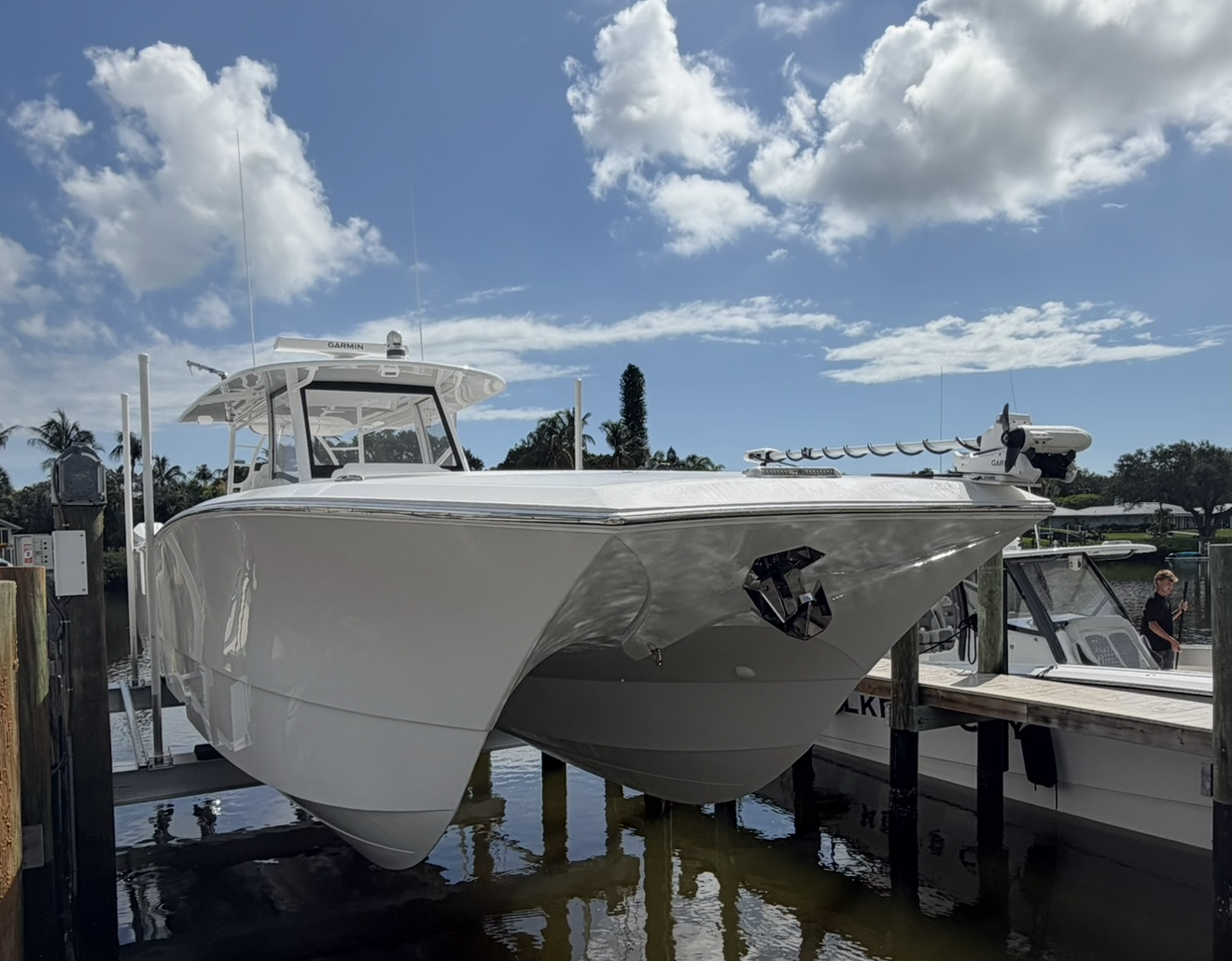
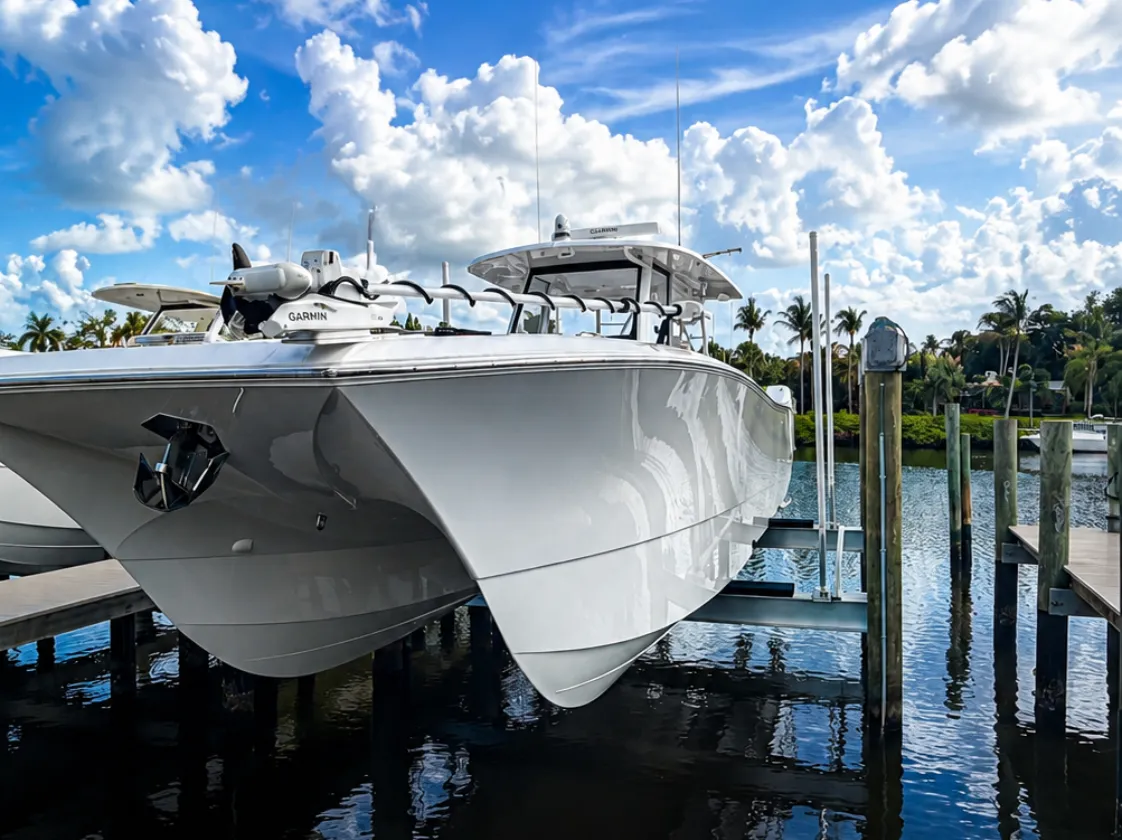
Leaving your boat in the water can result in issues such as slime and scum build-up or irreparable water and storm damage. Since a lift elevates your boat above the waterline, it helps you avoid these issues. A quality system is an invaluable security measure because it acts as a deterrent to thieves.
Besides protecting your boat from damage and reducing the risk of theft, a lift enables quicker boarding and more time on the open water. Since it keeps your vessel at dock level, your passengers can safely get on and off without dealing with fluctuating water levels and reduced stability.
What types of boat lifts are available?
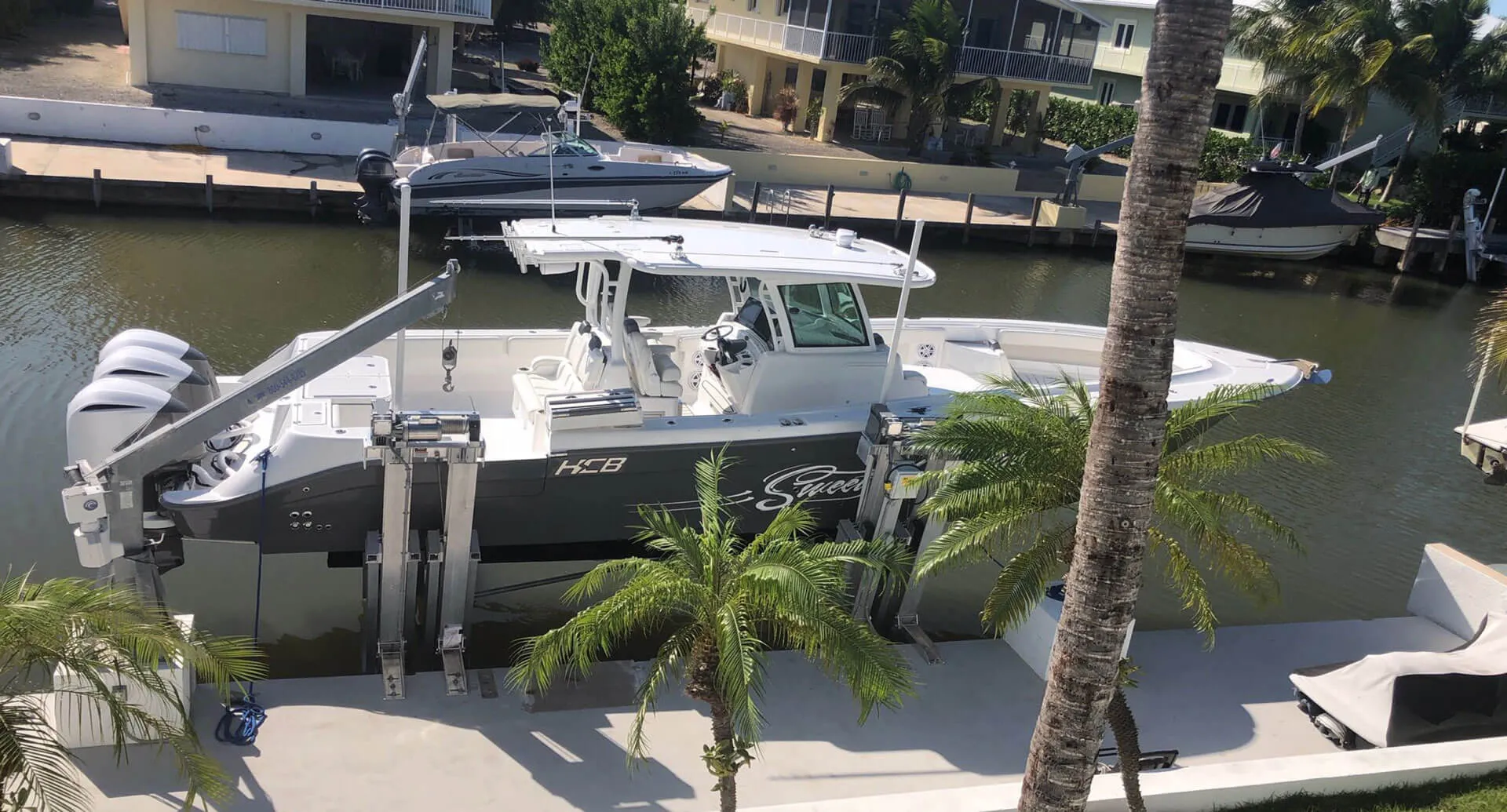
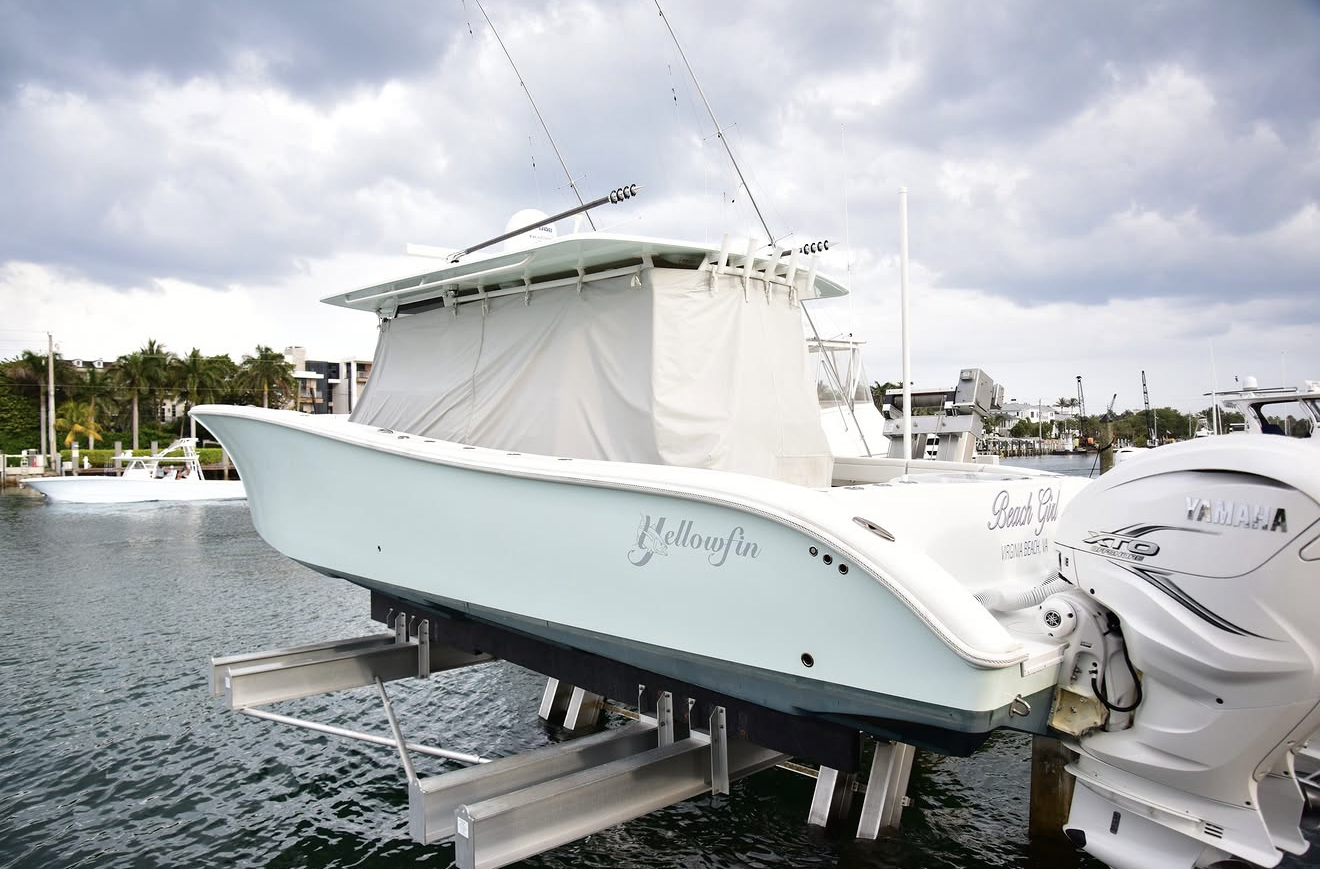
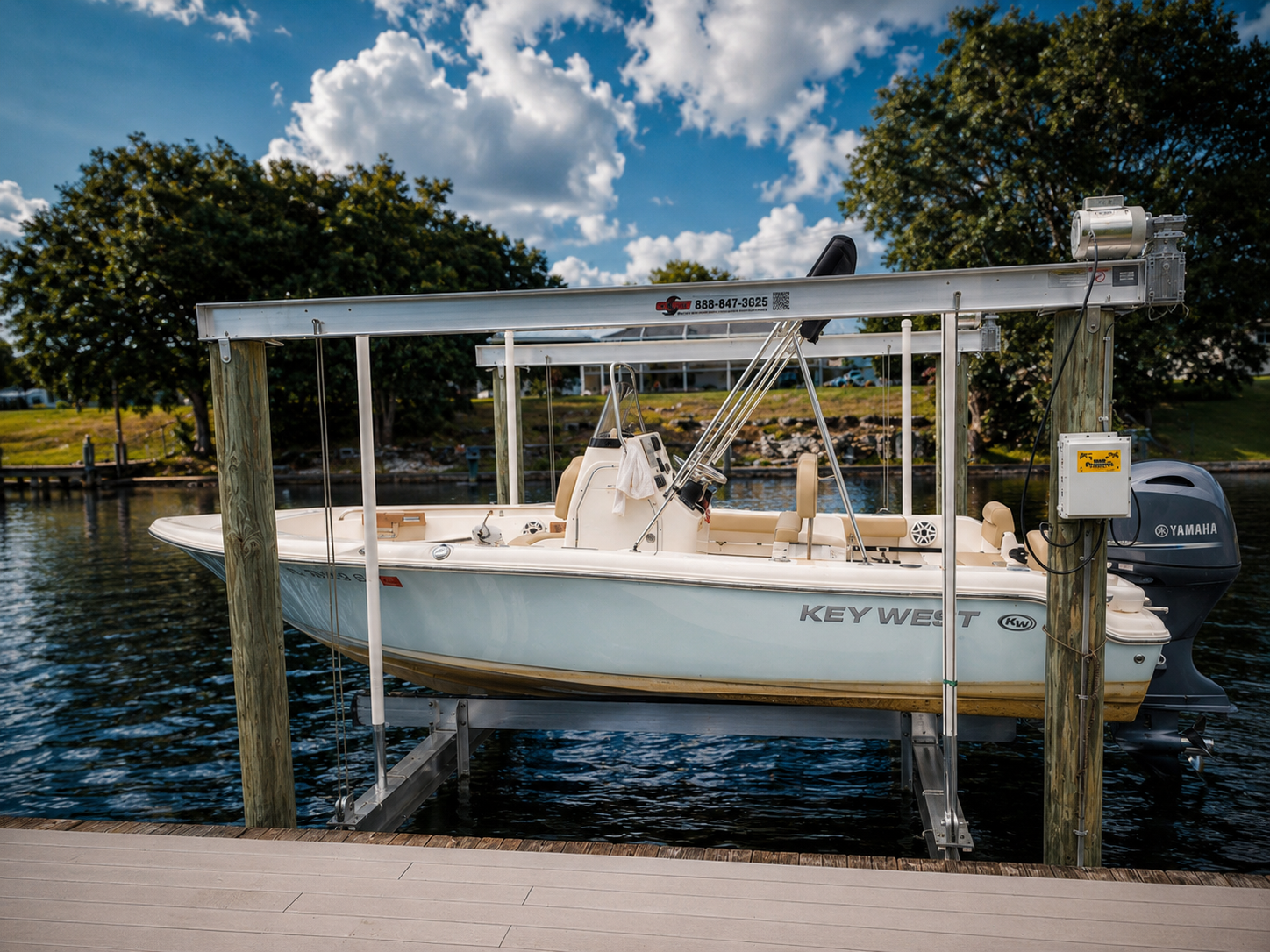
The best choice depends on your vessel size, dock structure, and local water conditions. Some common options include cradle lifts for general use, beamless lifts for larger boats that require vertical clearance, and elevator lifts for areas where pilings are restricted.
It’s important to note that different vessels require different solutions. These systems differ in the material they’re made from and the weights they carry. Here is a breakdown of the primary boat lifting systems available:
| Lift Type | Best For | Typical Capacity | Notes |
| Cradle Lift | Standard residential docks | Wide range | Most common, versatile, proven |
| Beamless Lift | Larger boats, open access | Mid to high | Open top, more vertical clearance |
| Elevator Lift | Narrow canals, no piling zones | Mid | Good where pilings aren’t allowed |
| Platform Lift | PWC and small craft | Low | Simple, fast, frequent use |
| Yacht Boat Lift | Large vessels | High (40,000+ lbs) | Heavy-duty, high capacity |
| PWC / Small Craft | Jet skis, small boats | Low | Keeps small craft out of the water |
| Storm Series Cradle | Storm-exposed docks | Wide range | Built for high wind and surge |
How much does a boat lift cost?
While pricing varies by dealer and site conditions, residential boat lift installations typically start from $3,000 depending on capacity and complexity.
Some of the factors driving the price include the weight rating, materials (aluminum vs. stainless steel), electrical requirements, permitting fees, and whether a professional survey is needed.
While prices vary, understanding what influences the final bill helps you budget accurately. A simple platform lift for a personal watercraft will be on the lower end, while a heavy-duty cradle system for a large yacht boat lift will require a significant investment.
Always request a detailed quote that includes labor and hardware to avoid unexpected expenses during boat lifting projects.
What size boat lift do I need?
To choose the right size, calculate your boat’s total wet weight (dry weight plus fuel, gear, and passengers) and add a 20% safety margin. This buffer accounts for additional equipment and enables the motor to operate efficiently without overloading, thereby extending the lift’s lifespan.
Boat lifts come in different capacities, storing boats weighing from 1,500 lbs. to more than 40,000 lbs. Knowing your vessel’s overall weight and beam allows you to choose your lift’s weight capacity and cradle width.
By determining the overall weight and adding that recommended allowance, you’ll arrive at a rough estimation. Doing so will allow additional wiggle room if you need to add items to the boat during storage, ensuring your boat lift system performs reliably for years.
Can I install a boat lift myself?
Boat lift installation requires careful planning, proper alignment, secure anchoring, and knowledge of local requirements. While some experienced boat owners may handle basic maintenance tasks, professional installation is recommended to achieve performance and protect your investment.
A qualified installer has the specialized tools and expertise needed to manage factors such as underwater foundations, electrical connections, and dock configurations.
Professional installation also helps maintain manufacturer warranty coverage and provides confidence that the system is set up correctly from the start.
Do I need a permit to install a boat lift?
Yes, most jurisdictions require permits for boat lift installations, often involving multiple agencies, such as local building departments and environmental protection agencies.
Reputable dealers typically handle the permitting process as part of their service, ensuring your installation is fully compliant with local regulations.
Navigating these regulatory requirements can be complex, which is another reason why professional installation is crucial. Experts know which forms to file and how to address environmental concerns, saving you time and preventing potential fines or removal orders.
How long do boat lifts last?
A well-built boat lift lasts about 25 years with proper maintenance. Aluminum and stainless steel components resist corrosion, and quarterly inspections of cables, bunks, and hardware can significantly extend the lift’s life.
Regular rinse-downs and inspections, especially in saltwater environments, help prevent premature wear.
Boat lifts made with high-quality materials are designed for long-term performance. With proper care and maintenance, you can maximize your lift’s useful lifespan and keep your investment protecting your vessel for decades.
How do I maintain a boat lift?
Regular maintenance helps keep your boat lift operating smoothly and protects its components from premature wear. Follow these steps to maintain your system:
- Rinse your boat lifting system with fresh water after each use, especially if it operates in saltwater environments, to reduce corrosion and buildup.
- Inspect cables, bunks, hardware, and zinc anodes every few months to identify signs of wear and address issues early.
- Avoid harsh cleaners that may damage protective coatings and use manufacturer-approved products when cleaning your lift.
- Lubricate moving components as recommended by the manufacturer to support smooth operation.
- Follow a consistent maintenance schedule to reduce repair needs and keep your boat lift performing reliably.
Do boat lifts work in saltwater?
Yes, boat lifts work effectively in saltwater when constructed with marine-grade aluminum and stainless steel hardware. However, saltwater environments require more frequent cleaning and inspection to prevent corrosion.
Regular rinsing and replacing sacrificial zinc anodes are essential to maintain structural integrity.
This is where build quality matters. Hurricane Boat Lifts uses premium materials designed to withstand harsh marine conditions, ensuring your system remains reliable even in challenging saltwater locations.
Can a boat lift protect my boat in a storm?
Raising your boat above the waterline significantly reduces damage from storm surge, floating debris, and wave action. While no boat lift system guarantees total protection against extreme hurricane-force winds, a properly secured lift minimizes impact.
For high-risk areas, specialized storm-series lifts are engineered to withstand higher wind loads and surges.
Hurricane Boat Lifts offers purpose-built solutions for these scenarios. By elevating your vessel, you reduce the surface area exposed to turbulent water, giving your boat the best possible chance of surviving severe weather events.
Does a boat lift add value to my property?
Yes. A boat lift adds real value to waterfront property by offering secure, convenient storage. Buyers treat an installed lift as a premium amenity that spares them the cost and hassle of installing one themselves.
This is especially true for high-quality boat lifts in South Florida, where durable marine infrastructure is a key selling point.
When choosing a boat lift, select the one that will provide the maximum protection for your boat. By knowing basic information and asking questions, you’ll surely be able to choose the right lift for your watercraft.
How to Choose the Right Boat Lift
Selecting the right lift involves more than just checking weight limits. Consider your dock’s structural capacity, the typical water depth at your location, and how frequently you plan to use the lift. If you live in an area prone to severe weather, prioritize models with enhanced stability features.
Understanding the different boat lift types available ensures you select a system that matches your specific environmental needs.
Additionally, think about future upgrades. If you plan to buy a larger boat in the next few years, it may be wise to invest in a higher-capacity system now. Consulting with a knowledgeable dealer can help you balance current needs with future possibilities, ensuring you don’t outgrow your equipment too quickly.
Talk to a Hurricane Boat Lifts Dealer
At Hurricane Boat Lifts, we design and build the highest quality and most attractive boat lifts at affordable prices. Our engineering-focused approach ensures every system is built to last, providing peace of mind for boat owners across South Florida.
Call us now to find a certified dealer or installer who can guide you through the selection and permitting process. Let us help you protect your vessel with a system built for performance and durability.