Skip to content

Not all boat lifts do the same job. The right system depends on your dock, your water conditions, and the size of your boat.
Some lifts are built for tight canals. Others handle open water and heavier loads. Choosing the wrong one can limit access, add wear to your boat, or create problems over time.
This guide breaks down the most common types of boat lifts, how they work, and how to choose the best option for your setup. Here’s what you’ll learn:
- The most common boat lift types and designs
- How different boat lift systems compare
- What to look for based on your dock and water conditions
- How to choose the best type of boat lift for your setup
Types of Boat Lifts Explained
Not every lift works in every setting. The design matters just as much as the capacity.
Water depth, dock structure, and boat size all play a role. A lift that works well on a quiet canal may struggle in open water. A system built for smaller boats can wear down quickly under heavier loads.
Below are the most common types of boat lifts, how they work, and where each one fits best.
Cradle Boat Lifts
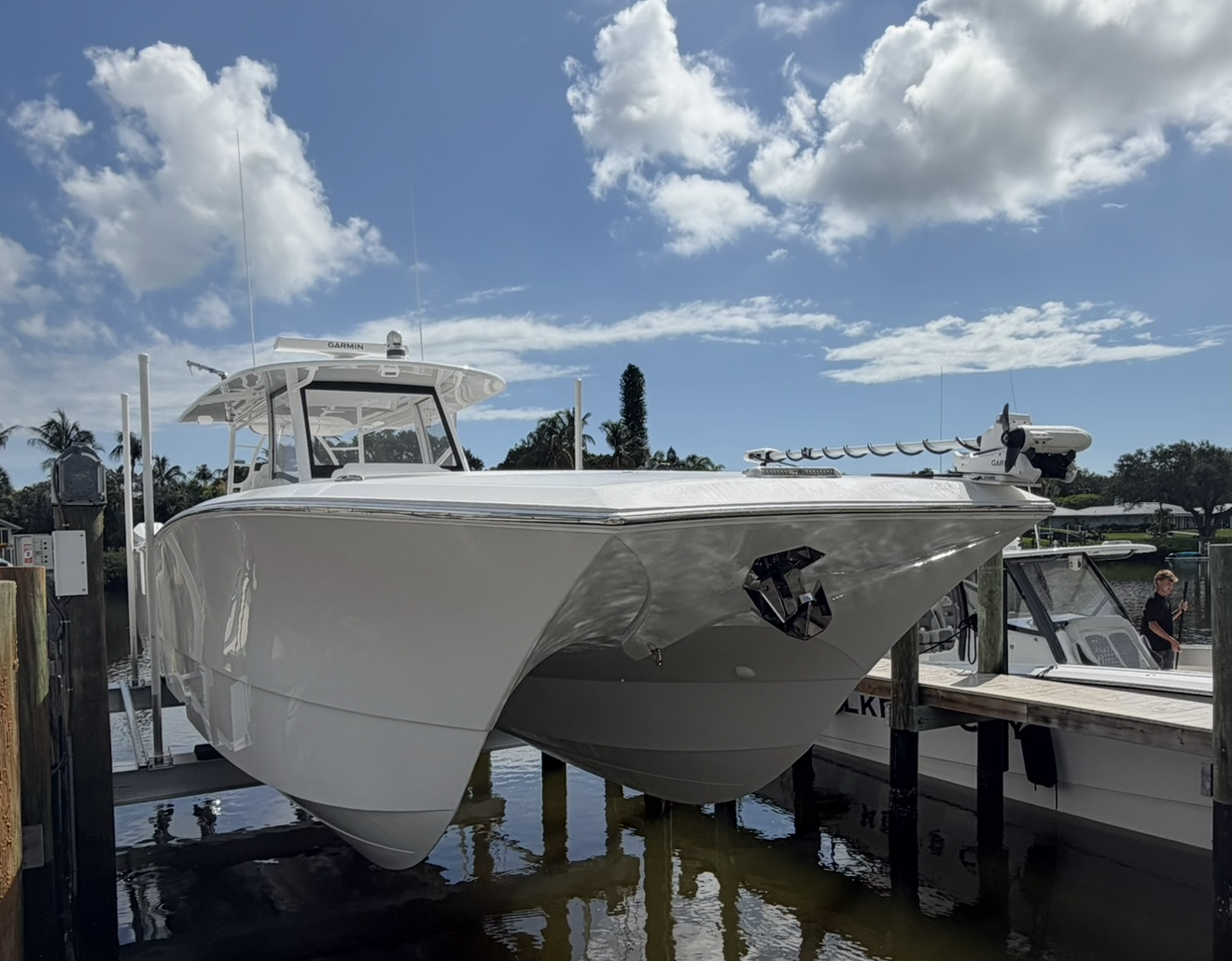
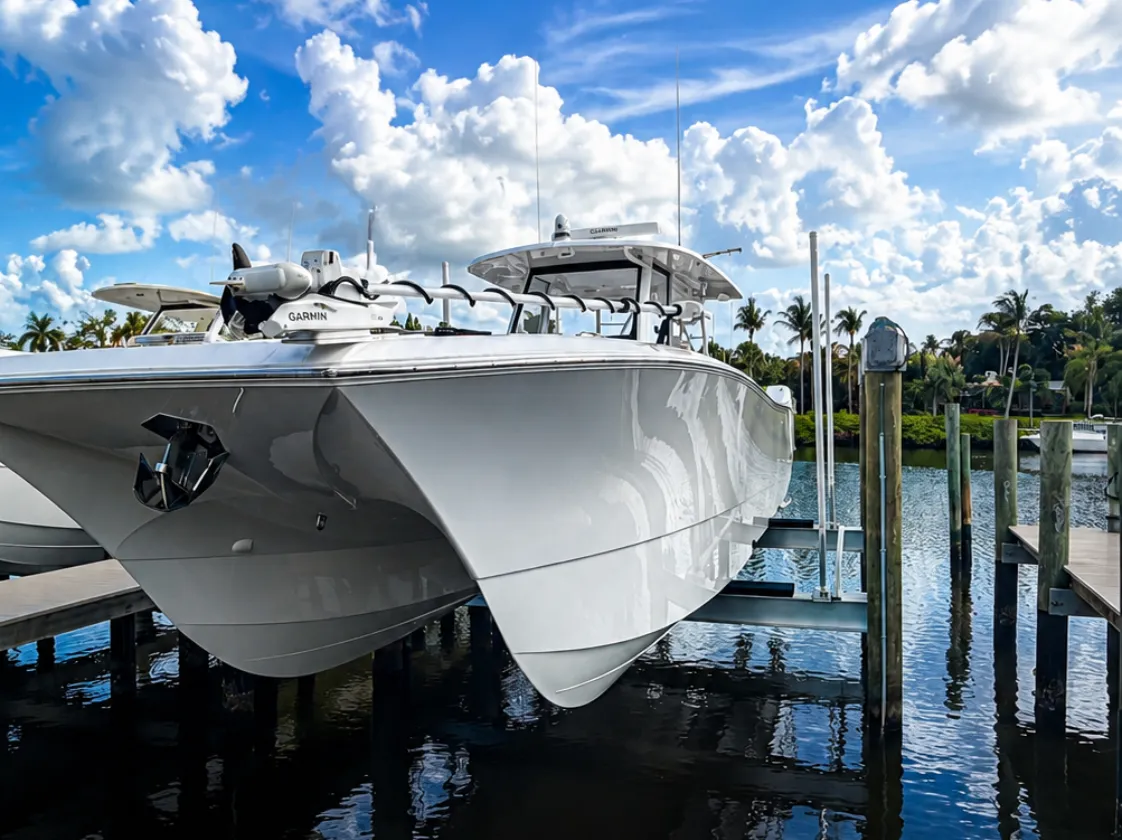
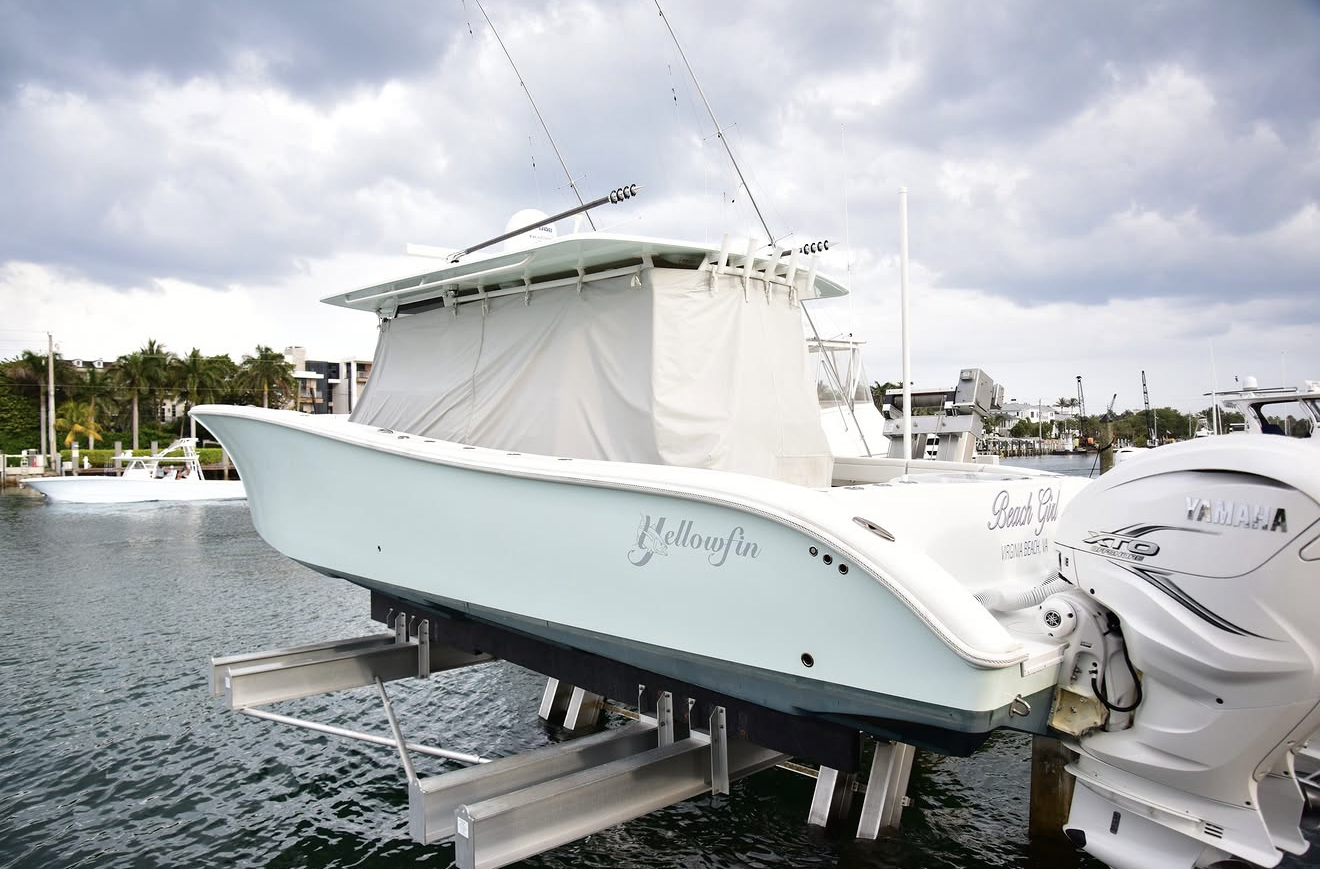
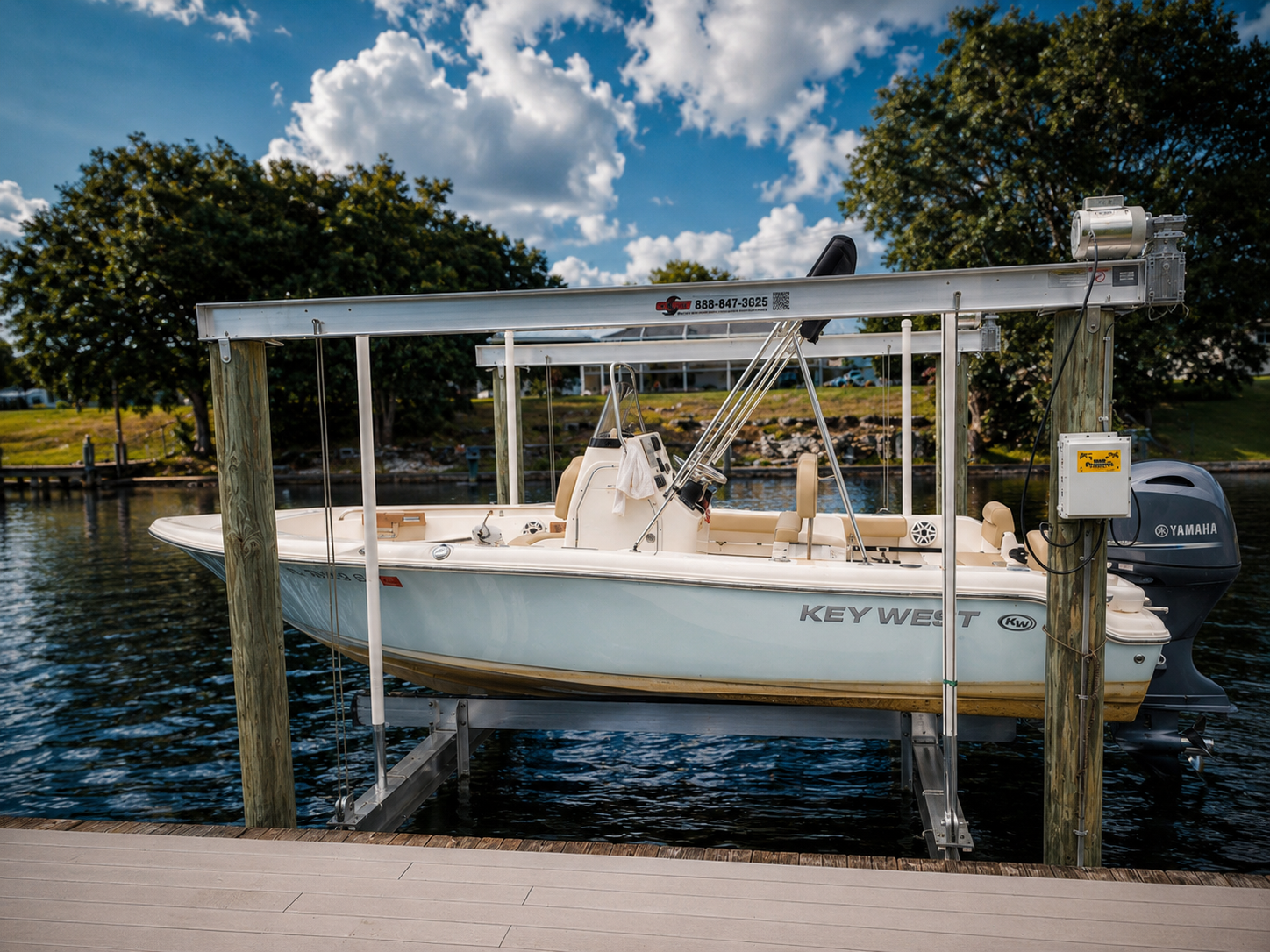
A cradle boat lift is the most widely used option for residential docks. It’s a proven system that balances strength, simplicity, and versatility.
These lifts use parallel bunks to support the hull and raise the boat straight up out of the water. The design keeps weight evenly distributed, which helps reduce stress on the boat over time.
Best for:
- Fixed docks with stable water levels
- Calm to moderate conditions
- Boats that need full hull support
How it works:
- Cables connect to a motorized system
- The cradle frame lifts vertically
- Bunks hold the boat securely in place
Why it works:
- Handles a wide range of boat sizes
- Straight vertical lift keeps alignment consistent
- Reliable, long-term performance with proper maintenance
Elevator Boat Lifts
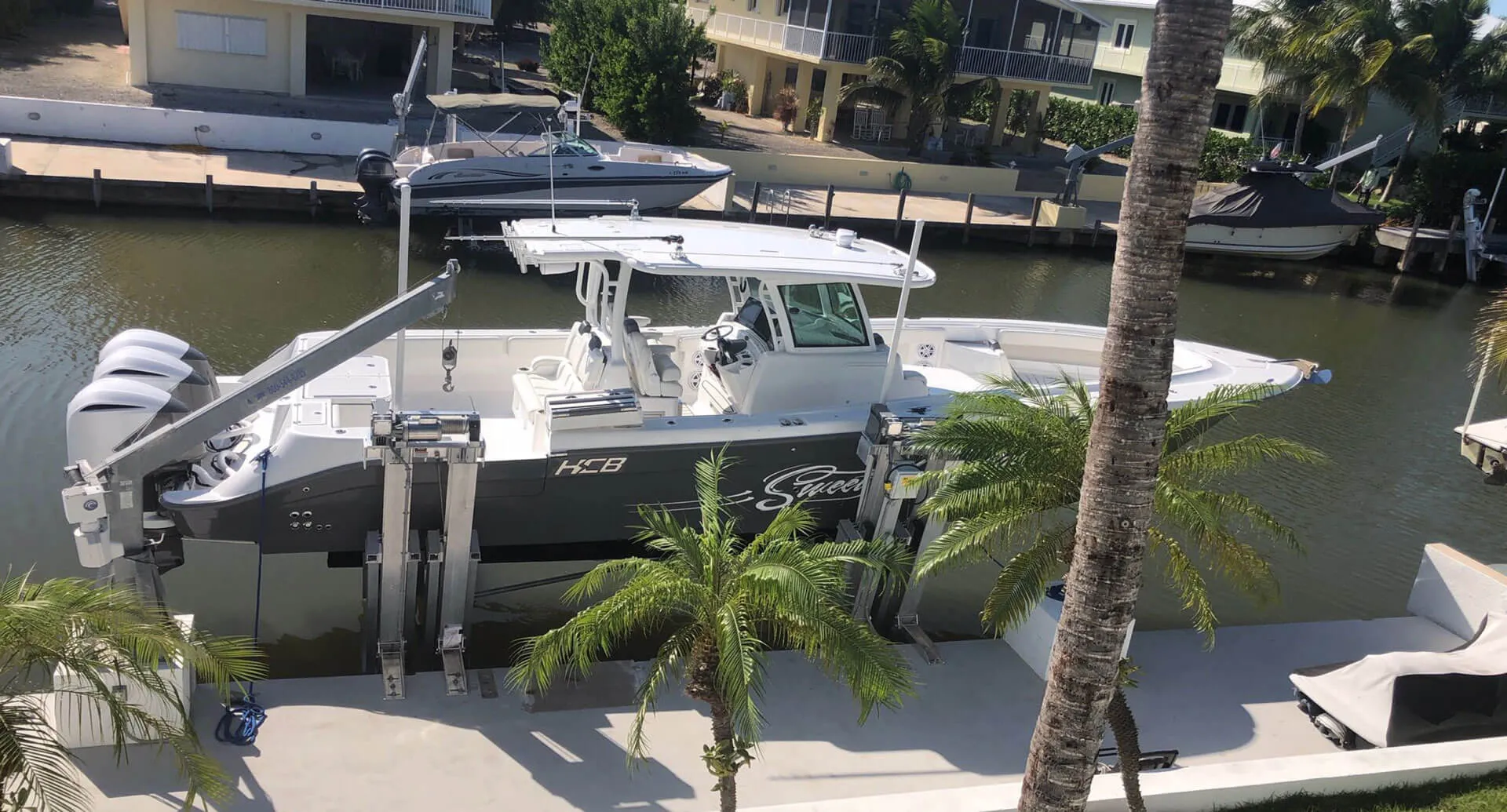
An elevator boat lift is designed for locations where space is limited. You’ll often see them in canals or along seawalls where a vertical lift is not practical.
Instead of lifting straight up, the system raises the boat at an angle and pulls it toward shore. This makes it easier to store the boat without needing a large footprint in the water.
Best for:
- Narrow canals
- Seawalls or tight dock layouts
- Shallow or restricted water
How it works:
- Mounted to pilings or a seawall
- Uses angled cables or tracks
- Moves the boat up and inward
Why it works:
- Maximizes limited space
- Keeps the boat closer to shore
- Reduces exposure to passing boat traffic
Platform Boat Lifts
A platform lift takes a different approach by supporting the boat from underneath instead of using bunks.
This design is especially common for smaller vessels and personal watercraft. It simplifies the loading process and removes some of the alignment challenges found in traditional systems.
Best for:
- Jet skis and PWCs
- Small boats
- Docks with frequent launches
How it works:
- Boat rests on a flat or slightly contoured platform
- Lift raises evenly from below
- Can be manual or motorized
Why it works:
- Easy drive-on access
- Faster launch and retrieval
- Less adjustment required between uses
Beamless Boat Lifts
A beamless boat lift removes the overhead beam found in traditional cradle systems. This creates a more open design with fewer structural obstructions.
The lift still supports the boat using bunks and cables, but without the top beam, there’s more vertical clearance and a cleaner visual profile.
Best for:
- Larger boats with higher profiles
- High-end waterfront properties
- Docks where aesthetics matter
How it works:
- Uses independent pilings for support
- Eliminates the top crossbeam
- Maintains lifting strength without overhead structure
Why it works:
- Improves access around the boat
- Allows for taller vessels
- Cleaner, more modern look
Yacht Lifts
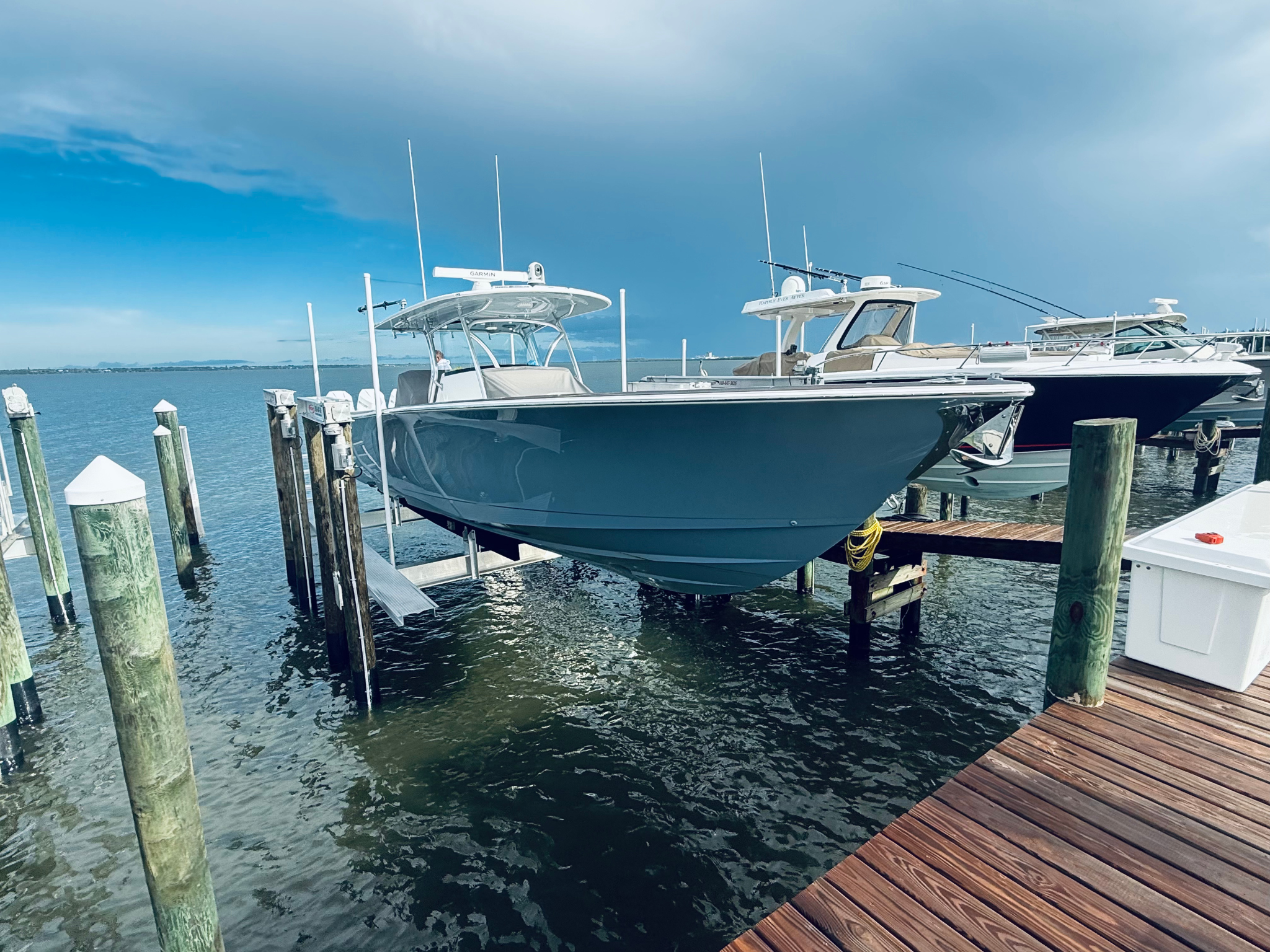
A yacht lift is built for large vessels and demanding conditions. These systems are engineered to handle significant weight while maintaining stability and control.
They are commonly used in open water environments or at marinas where larger boats require consistent, heavy-duty performance.
Best for:
- Boats over 20,000 lbs
- Open water or exposed areas
- Long-term, high-capacity use
How it works:
- Reinforced structure with heavy-duty components
- High-capacity motors and cables
- Designed for balanced lifting across large hulls
Why it works:
- Handles extreme weight loads
- Built for durability in harsh conditions
- Reduces long-term strain on larger vessels
Boat Lift Comparison Table
| Lift Type | Best Use Case | Capacity Range | Key Advantage |
| Cradle Lift | Standard residential docks | 5,000-30,000 lbs | Stability and versatility |
| Elevator Lift | Narrow canals | 4,500-20,000 lbs | Space-saving design |
| Platform Lift | PWCs and small boats | 1,500-10,000 lbs | Easy loading |
| Beamless Lift | High-end docks | 10,000-50,000+ lbs | Open, clean design |
| Yacht Lift | Large vessels | 20,000-80,000+ lbs | Heavy-duty performance |
How to Choose the Right Boat Lift
Choosing the right boat lift comes down to your boat, your dock, and your water conditions. Work through each of these and the right boat lift system becomes much clearer.
Step 1: Start With Your Boat Size and Weight
Capacity is the baseline. Every lift is rated for a specific load, and that number should include fuel, gear, and anything stored onboard.
Undersizing a lift leads to strain on cables, motors, and structure over time. Most setups should allow a buffer above the boat’s actual weight.
Step 2: Evaluate Your Dock and Available Space
Your dock layout will limit which boat lift types actually fit. Tight canals and seawalls often require angled systems like elevator lifts. Open docks give you more flexibility with cradle or beamless designs. Clearance, piling placement, and shoreline distance all factor in here.
Step 3: Consider Water Depth and Conditions
Water conditions change how a lift performs. Calm, protected areas allow for simpler systems. Open water, tides, and boat traffic create more movement and stress on the lift. In those cases, stability and build quality matter more than convenience.
Step 4: Match the Lift Design to Your Usage
Think about how often you’re using the boat. Frequent use favors simpler, faster systems like platform lifts. Larger boats or long-term storage setups often benefit from more robust boat lift designs built for durability.
Boat Lifts in Florida: What to Consider
Choosing a lift in Florida comes with a different set of challenges. Saltwater, tides, and boat traffic all put more stress on boat lift systems.
Key factors to account for:
- Saltwater corrosion: Marine-grade materials matter. Aluminum and stainless components hold up better over time.
- Tides and water movement: Changing water levels and wakes can shift loads and add strain to the lift.
- Storm exposure: Wind and surge increase the need for stability and higher capacity systems.
- Dock and seabed conditions: Soft bottoms or older pilings can affect how the lift is installed and supported.
In areas like Jupiter, Florida, these conditions show up quickly. That’s why many residential boat lifts are built heavier and more durable than similar setups in calmer environments.
Frequently Asked Questions
The most common types of boat lifts include cradle lifts, elevator lifts, platform lifts, beamless lifts, and yacht lifts. Each one is built for a specific type of dock setup and boating environment.
Cradle lifts are the standard for most residential docks. Elevator lifts work well in tight canals or along seawalls. Platform lifts are common for smaller boats and personal watercraft. Beamless and yacht lifts are designed for larger vessels or properties where space, access, or aesthetics matter more.
Start with your boat’s total weight, including fuel, gear, and equipment. From there, look at your dock layout and how much space you have available.
Water conditions are just as important. Calm, protected areas allow for more flexibility, while open water or tidal environments require stronger, more stable boat lift systems. Matching the lift to both the boat and the environment is what leads to long-term performance.
Find the Right Boat Lift for Your Setup
Choosing the right lift protects your boat and makes every launch easier. The difference shows up over time, not just on day one. The right system reduces wear, keeps your boat secure, and fits how you actually use your dock. The wrong one creates friction every time you get on the water.
If you’re comparing boat lift options or narrowing down the best boat lift types for your setup, it helps to talk through the details with someone who knows the conditions. Hurricane Boat Lifts builds and installs residential boat lifts designed for Florida waterfronts, from tight canals to open water docks.
Talk to the team and get a recommendation that fits your boat, your dock, and your water conditions. Request a quote today!