Skip to content

In Florida, hurricane season is not a distant concern. It is here, it is active, and for boat owners with a lift on their dock, the time to prepare is right now, not when a storm is already named.
A few hours of attention right now can be the difference between a vessel that rides out a storm safely and one that does not.
This guide covers what storm readiness actually looks like for lift owners, what to inspect before the season starts, and how the right lift can make a real difference when conditions turn serious.
Hurricane season runs through November 30. The most active period is August through October. The window to prepare is open right now, and it closes faster than most boat owners expect.
Why Right Now Is the Time to Act
Most boat owners think about storm prep when a storm is already in the forecast. By that point, marine supply stores are picked over, contractors are booked, and there is no time to address anything that needs repair or replacement.
Acting early in the season is where you can still move at your own pace. Schedule an inspection, order any parts that need replacing, and confirm your lift is operating at full capacity while there is still time. It is also the right moment to evaluate whether your current lift is actually rated for the conditions your dock faces.
The boat owners who fare best in storm season are the ones who acted early, not the ones who scrambled when a storm was already in the forecast.
What to Inspect Before Hurricane Season
A boat lift has several components that need attention before storm season. Work through each one systematically rather than doing a quick visual scan and calling it done.
Cables
Cables are the most critical load-bearing component of your lift. Look for fraying, kinking, corrosion spots, or any signs of uneven wear. A cable that looks mostly fine can still be compromised. If you see anything that concerns you, replace it before the season, not after.
Bunk Boards and Cradle Pads
Bunk boards take on wear from repeated use and prolonged UV exposure. Check the padding for cracking, compression, or deterioration. Worn bunks affect how evenly the vessel is supported, which matters significantly when wind and surge put lateral force on the lift.
Motor and Drive System
Run the lift through a full cycle and pay attention. Listen for grinding, hesitation, or unusual sounds. Check response time and confirm the lift raises and lowers evenly. Any motor issue that is manageable now can become a failure point mid-season.
Hardware and Fasteners
Saltwater environments accelerate corrosion on bolts, brackets, and connection points. Check every fastener you can access. Tighten anything that has worked loose and replace any hardware showing significant rust or structural compromise.
Dock and Piling Connections
The lift is only as stable as what it is attached to. Inspect the connection points between the lift and your dock structure. Any movement or play in those connections needs to be addressed before storm season adds wind and surge to the equation.
Pre-Season Inspection Checklist
Use this checklist to work through your lift inspection right now. Print it out or save it to your phone.
| Pre-Season Inspection Item | Completed |
|---|---|
| Inspect lift cables for fraying, corrosion, or kinks | [ ] |
| Check bunk boards and cradle padding for wear or damage | [ ] |
| Test motor operation: listen for unusual sounds, check response time | [ ] |
| Inspect all hardware: bolts, brackets, and fasteners for rust or loosening | [ ] |
| Rinse the entire lift with fresh water to clear salt and debris buildup | [ ] |
| Check piling connection points and dock attachments for stability | [ ] |
| Confirm the vessel is properly centered and seated on the lift | [ ] |
| Review your storm plan: do you know your lift-down protocol before a storm? | [ ] |
Before a Storm: What to Do With Your Lift
When a storm is in the forecast and heading your way, your boat lift protocol matters as much as the lift itself. Here is what to work through in the days before a storm makes landfall.
- Lower the vessel to water level or remove it entirely if trailering is an option. A boat sitting high on a lift in a high-wind event is exposed to significant lateral force.
- Secure all lines. Use additional dock lines to tie the vessel to pilings or a fixed structure. Do not rely on the lift alone to hold the boat in surge conditions.
- Remove canvas, bimini tops, and any removable components that catch wind. These become projectiles and can also put force on the vessel that transfers to the lift structure.
- Remove or secure any electronics, gear, or loose equipment stored on board.
- If evacuating, confirm the dock is as clear as possible and that the lift is in its lowest position to reduce wind resistance on the structure.
Your marina or dock association may have specific storm protocols. Know what they are before a storm is in the forecast, not when one is already named.
The Storm Series Cradle Lift: Built for What Florida Demands
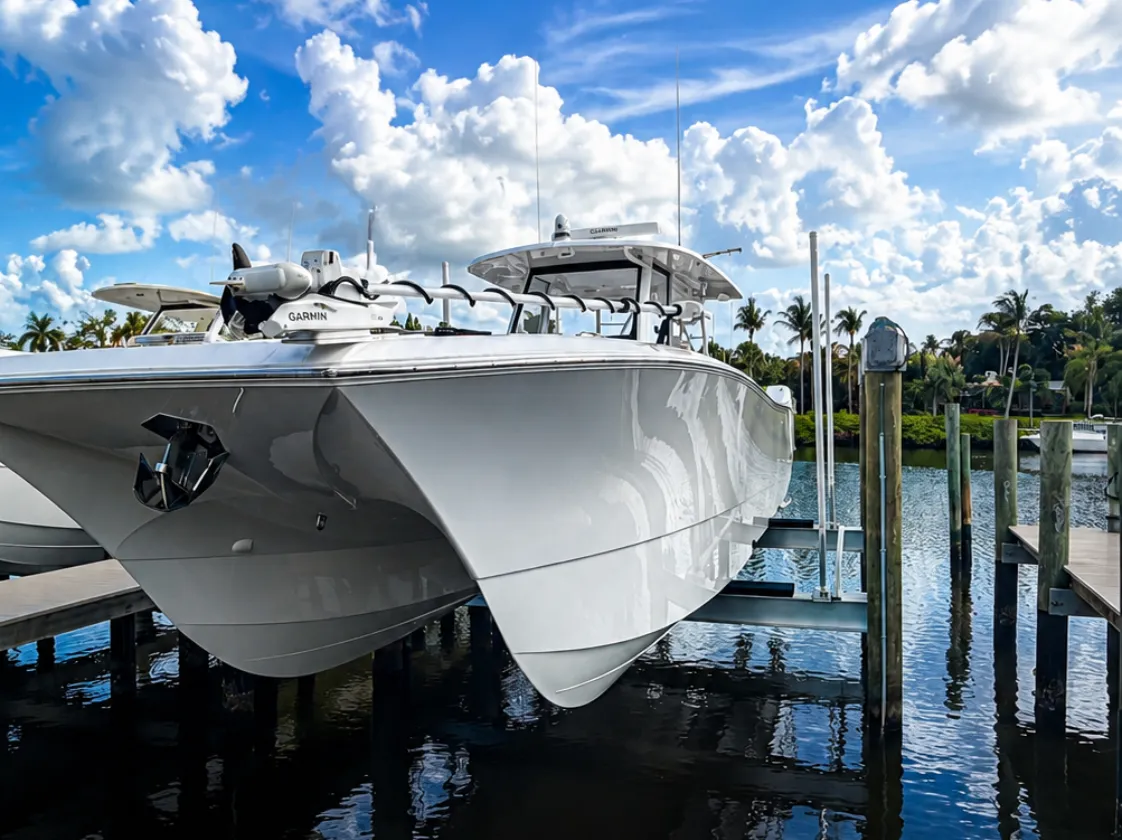
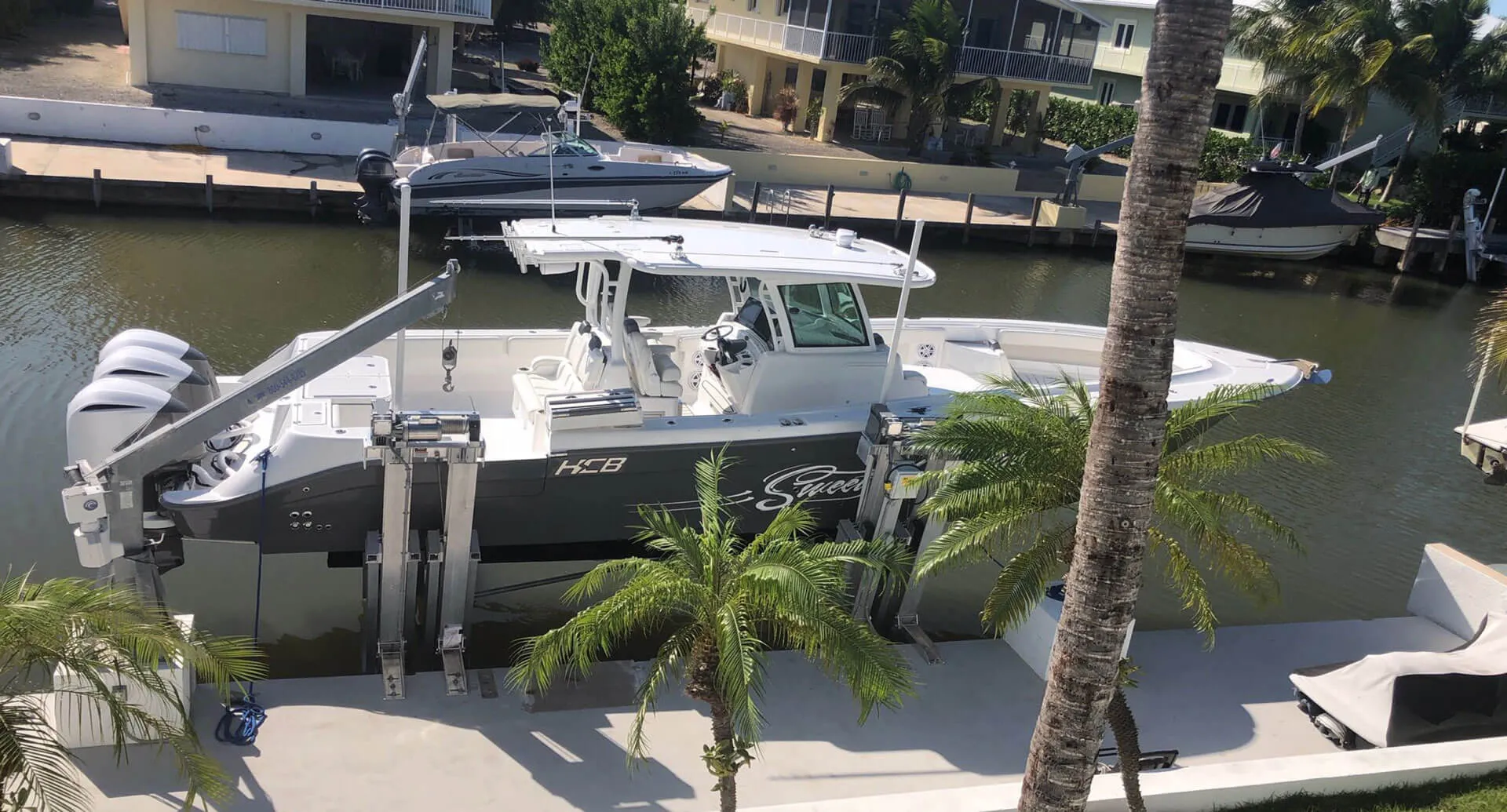
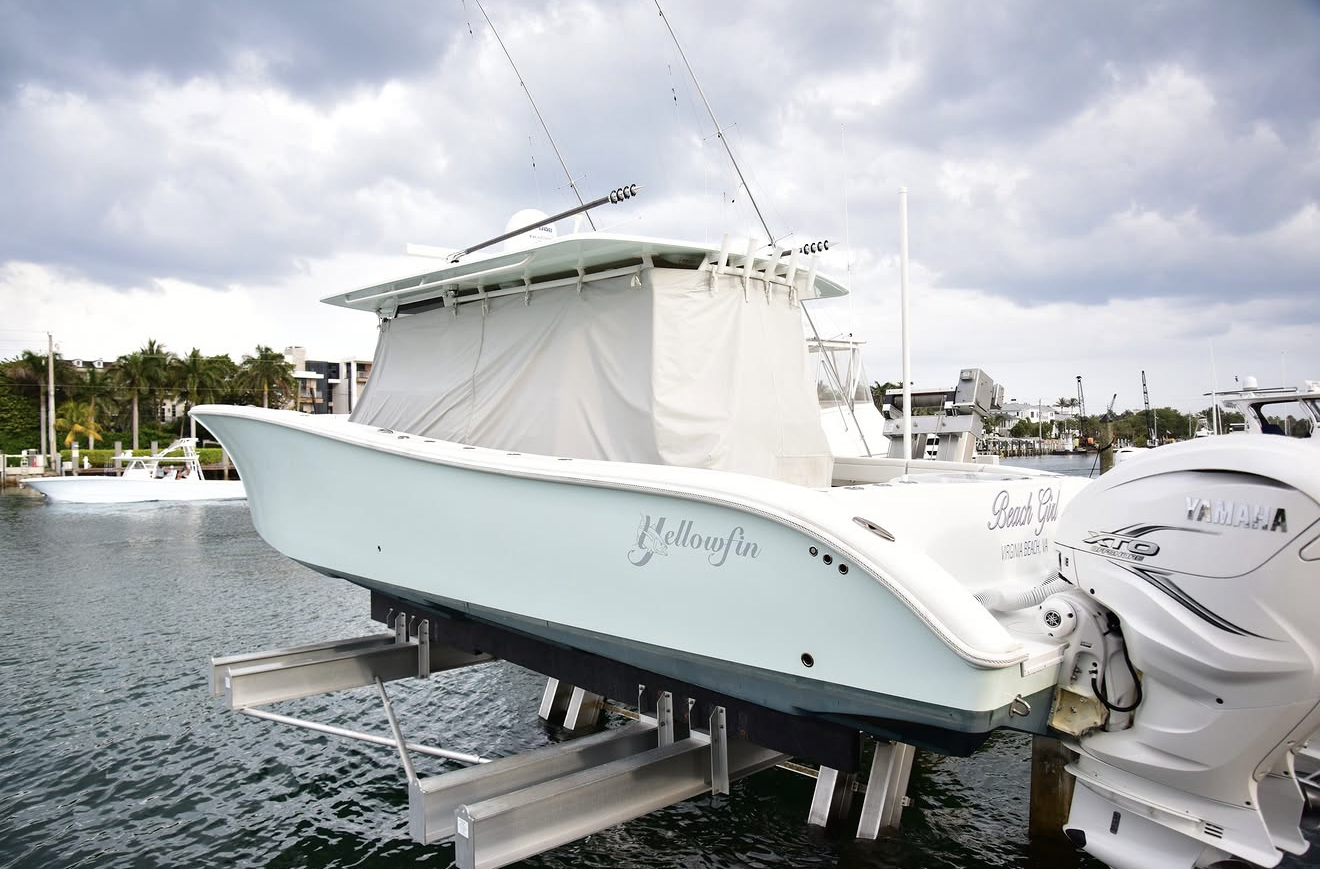
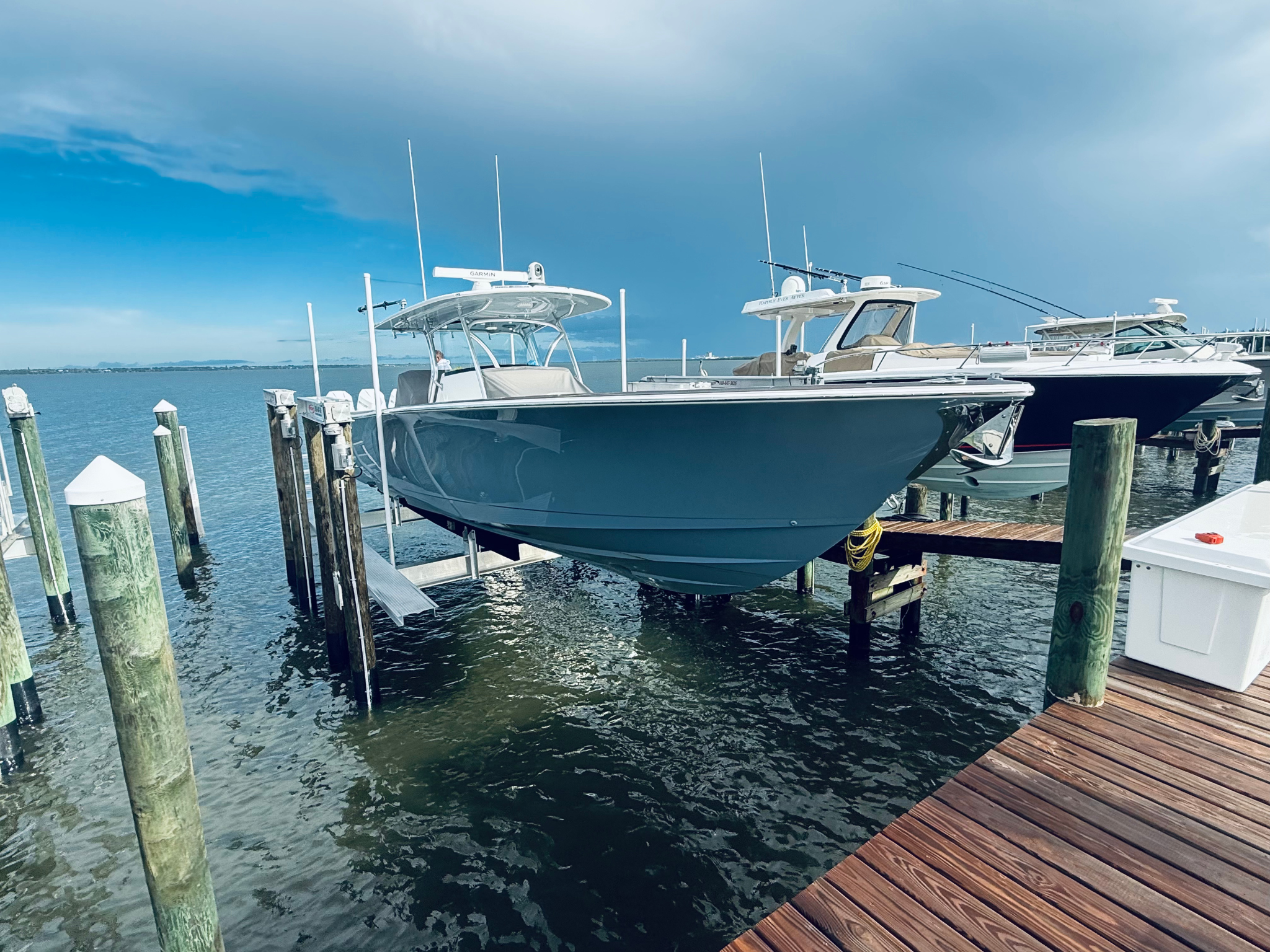
Not all boat lifts are engineered equally for storm conditions. Standard lifts are built for regular use in normal weather. The Storm Series Cradle Lift from Hurricane is designed specifically for environments where storm exposure is a real and recurring risk.
What Makes It Different
- Engineered for high-wind conditions, with a holding structure designed to resist the lateral and vertical forces that surge and sustained winds produce
- The cradle bunk system provides firm, distributed hull support that keeps the vessel secured in rough conditions, not just floating on a platform
- Built for coastal and near-coastal Florida dock environments where standard lifts are regularly pushed beyond their design parameters
- Available in capacity tiers to cover vessels from mid-size sportfishers up through larger cruisers
If your dock is in an exposed location, a canal mouth, a coastal waterway, or any area with a history of surge flooding, the Storm Series is worth a direct conversation with a Hurricane dealer before this season begins.
A standard lift in a storm-exposed location is an undersized tool for the job. The Storm Series exists because Florida conditions require a lift that is engineered for them.
Is Your Current Lift Right for Your Location?
Now is also a good time to honestly evaluate whether your current lift is sized and rated for the conditions your dock actually experiences. Ask yourself these questions:
- Is your dock in a location that has seen surge flooding in past storm events?
- Does your vessel sit at or near the top of your current lift’s load capacity?
- Has your lift shown any signs of stress, flex, or movement in strong winds or rough water?
- Was your lift installed more than 10 years ago and never evaluated for current storm ratings?
If you answered yes to any of those, a conversation with an authorized Hurricane dealer right now is worth the time. Getting the right lift in place early in the season is a better outcome than dealing with the consequences of the wrong one when a storm is bearing down.
The Bottom Line
Storm readiness is not a single action. It is a process: inspect your lift now, address what needs attention, know your storm protocol, and confirm your lift is actually rated for the conditions you face.
Hurricane Boat Lifts has been engineering and assembling lifts in Stuart, Florida since 1998. The Storm Series Cradle Lift is one of nine lift categories built specifically for the range of conditions Florida boat owners deal with, from calm canal docks to open coastal exposure.
The season is here. Act now.
Ready to evaluate your lift for hurricane season? Contact Hurricane Boat Lifts or find an authorized dealer near you at hurricaneboatlifts.com.