Skip to content
Key Takeaways:
- Water depth, tides, and bottom conditions should guide boat lift selection, not just the boat itself or the style.
- The wrong lift type for your specific conditions can lead to instability, difficult boarding, and long-term maintenance issues.
- Shallow water boat lifts and floating systems can solve clearance problems that fixed lifts can’t.
- Tidal range, fluctuating water levels, and bottom composition impact which boat lift design will perform best at your dock.
- Planning with a site-specific boat lift installation guide will help you choose the right lift the first time, avoiding costly changes later.
Boat lift selection is a surprisingly multifaceted process. There are several things you have to get right, because messing this one up may turn into serious safety issues, extensive and redundant maintenance, and piles of money being spent on repairs.
Think about it: It’s not like the water just sits there, slick as a pond on a still evening and never changing. Water depth, tides, and the type of bottom composition you’re dealing with all combine to determine how your lift will operate.
This is why a shallow water boat lift can be a very different decision from a lift installed in deep water or in a protected marina. This boat lift installation guide will walk you through the real site conditions that can potentially impact boat lifts, so you can avoid costly mistakes and choose a lift that fits your waterfront property.
Why Water Conditions Matter for Boat Lift Installation
The local water conditions will impact how your lift operates on a day-to-day basis, not just on the day you install it. If the site is not matched to the lift type, the system may end up sitting unevenly. It may wear out faster or become difficult to use over time.
The wrong choice can lead to damage, instability, and poor usability. A lift that works well in one location may fail in another because of water depth, wave action, marine growth, or other changing dock conditions.
As an example, canals in the South Florida region can fluctuate up to 2.5 feet in most areas. When your average depth is 6′, that can matter quite a bit when calculating for your boat lift.
How Deep Does the Water Need to Be for a Boat Lift?
The water depth for a boat lift depends on the lift design and the boat itself. Most systems require enough clearance for the boat to sit above the waterline without the hull, propeller, or lift components scraping the bottom.
Boat size and draft are both important as well. A larger boat or a deeper draft will typically require more depth, while some vertical boat lifts and elevator boat lifts may be better suited to sites where depth changes from one area to another.
Can Boat Lifts Work in Shallow or Low-Water Areas?
Boat lifts can work in shallow or low-water areas, but only with the right system. Boat lifts for shallow water have to account for the limited clearance, including hull risk and the possibility that the boat may sit too close to the bottom if the lift isn’t designed properly.
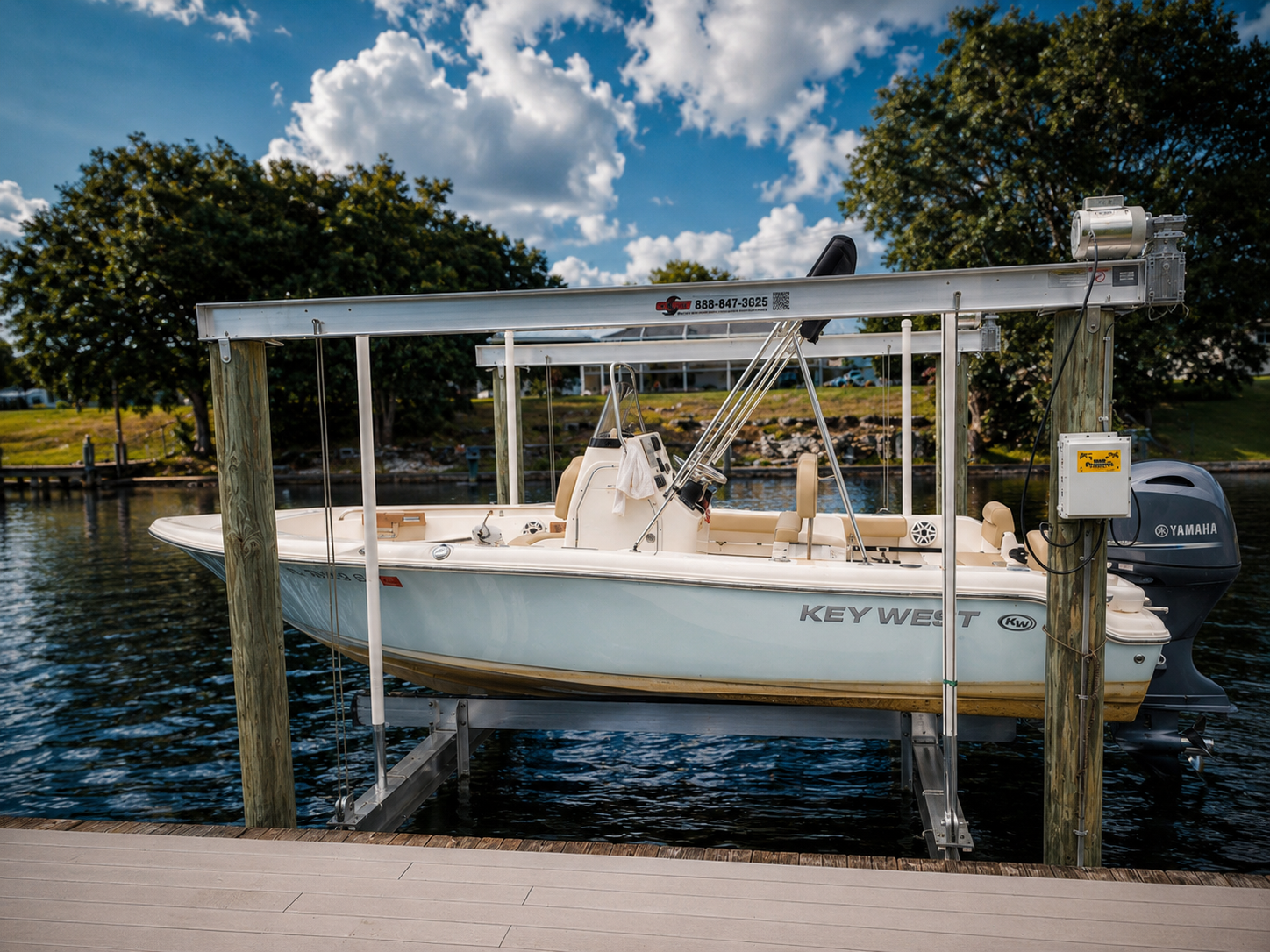
The best boat lifts for shallow water scenarios are often floating lifts, hydraulic systems, or low-profile cradle lifts. These shallow water boat lifts are specifically designed to make launching and storage much easier without forcing the boat into a depth that the site simply can’t support.
What Type of Boat Lift Works Best for Fluctuating Water Levels?
Changing water levels can make a standard lift more difficult to use, especially if the dock sits in an area with seasonal swings. A floating boat lift or floating lift will rise and fall with the water, which helps keep the boat accessible as conditions change.
Adjustable piling systems and certain hydraulic lifts can also work well when the water changes often. The best choice depends on whether or not the issue is daily tide movement or slower seasonal variations. The two conditions can impact the lift in different ways.
How Do Tides Affect the Performance of a Boat Lift?
Tides change the usable water depth around the dock throughout the day. It affects the accessibility of the lift, the mooring alignment, and how easily the boat can be positioned before or after a trip.
In tidal areas, a fixed system may work at high tide, but become awkward or risky at low tide. This is why vertical lifts and floating boat lifts usually outperform traditional, fixed step setups when tidal fluctuations are a part of everyday waterfront conditions.
Can a Boat Lift Be Installed in Muddy or Sandy Bottoms?
They can be, but the installation process needs to account for shifting sediment and anchoring strength. Muddy and sandy bottoms can shift over time, which means the lift must be supported by the right foundation and hardware.
Wider base structures, helical anchors, and pilings are often used to improve stability in these settings. If marine growth, rough water, or prolonged water exposure are also factors, the lift should be designed for long-term reliability, instead of just the initial install.
Does Bottom Type Affect Boat Lift Stability and Installation?
Bottom type can certainly change how a boat lift is installed and how stable it remains as time passes. Water is a powerful element, and it will change the bottom over time. How quickly those changes take place depends on the bottom’s composition.
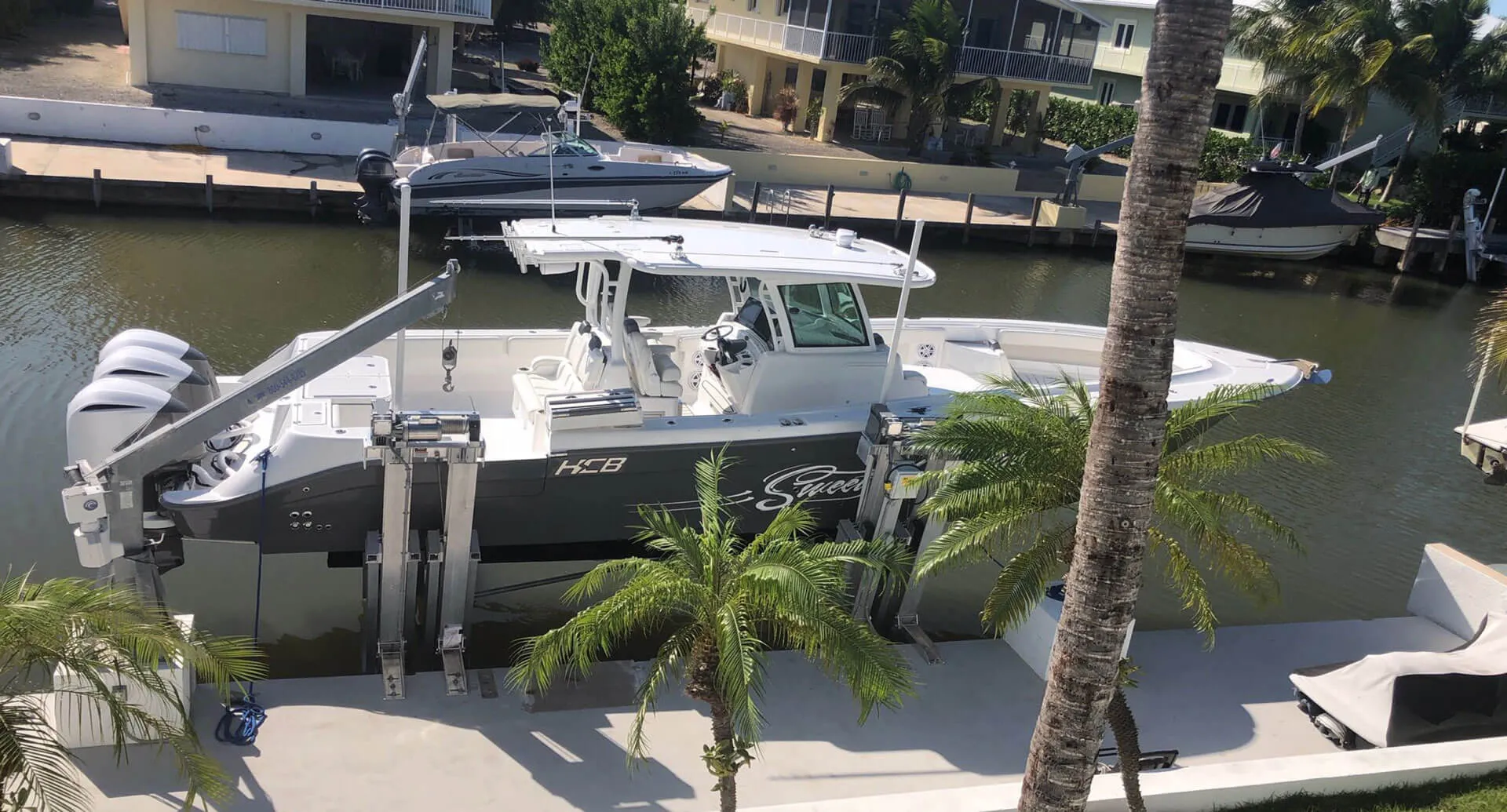
Mud can shift and settle, sand can move with current or wave action, and rock may require more complex installation, though it generally provides stronger support once in place. The best system depends on the site, but vertical boat lifts, hydraulic lifts, and certain elevator boat lifts may each make sense, depending on the bottom.
Choosing the Best Boat Lift for Your Waterfront Conditions
The approach here is fairly simple: Start by determining your site’s conditions, then match the lift to the site.
First, measure water depth at low tide and at average conditions, so you know how much clearance you really have. Next, evaluate the tidal range, check the bottom type, and consider the boat’s size, hull shape, and weight capacity.
Once these factors all become clear to you, it’s easier to choose the right boat lift instead of guessing between different lift configurations.
Common Mistakes to Avoid When Selecting a Boat Lift
One of the biggest mistakes is ignoring the seasonal water changes that take place in your area. A lift that looks fine in calm, summer conditions may become difficult or impossible to use when water levels rise or drop.
Another mistake is choosing based on price rather than on waterfront conditions. Skipping a professional site evaluation can also create problems later on, especially if sediment, erosion, or dock limitations were not considered before installation.
Final Thoughts: Matching Your Boat Lift to Your Environment
The best boat lift selection is the one that’s the best match for your environment around your dock. Water depth, tides, bottom type, and boat design all impact the performance, safety, and ease of use of the system.
Regardless of the type of boat lift you’re looking at, taking the time to choose carefully now can make boat ownership safer, easier, and more cost-effective later.
Frequently Asked Questions
The water needs to be deep enough to allow safe lift operation and enough clearance for the boat, lift system, and bottom conditions at the dock.
Yes, boat lifts can work in shallow water, but the lift must be designed for shallow water conditions and limited clearance.
The best boat lift for shallow water conditions is often a floating lift, hydraulic lift, or low-profile cradle-style system.
Yes, tides affect boat lifts by changing access, alignment, and long-term usability with the fluctuating water levels.
Yes, but the installation has to account for shifting ground and secure anchoring.
Don’t Wait for the Water Levels to Tell You
Water depth, tides, and bottom conditions are constantly at work under your dock. The warning signs of a poorly matched boat lift often show up slowly, as those conditions change. One day, the system is under more stress than it can safely handle.
At Hurricane Boat Lifts, we design and build quality boat lifts engineered for real-world waterfront conditions, from shallow canals to deep-water marinas. Our team looks at the water depth, tidal range, bottom composition, hull type, and lift type so you can choose the right boat lift the first time and enjoy smoother, safer operation season after season.
Contact Hurricane Boat Lifts today to discuss your site conditions, request a professional boat lift installation guide, or get help selecting the best solution for your waterfront property.