Skip to content
Key Takeaways
- Cable failure is preventable with regular inspection, lubrication, and timely replacement
- Early warning signs should never be ignored, including fraying, rust, uneven lifting, and unusual noises, all of which demand attention
- Immediate action after a cable snaps limits damage and keeps people safe
- Professional inspections catch what visual checks miss and protect the system long term
A boat lift cable doesn’t announce when it’s about to fail. One day it holds steady, and the next it gives way under the weight of a vessel that costs more than most people’s cars. The damage happens fast, and so does the danger to anyone nearby.
Annual boat maintenance runs about 10% of a vessel’s purchase price, according to WSOC TV, meaning a $75,000 boat already demands $7,500 a year just to stay seaworthy. A failed lift cable on top of that is a structural event with real consequences for the boat, the lift, and anyone standing near the dock.
Most cable failures build quietly through corrosion, wear, and neglect until the system gives out at the worst possible moment. Knowing what to look for and what to do when something goes wrong is what separates a close call from a catastrophe.
In this post, we’ll cover:
- What boat lift cable failure actually is and why it matters
- The most common causes and warning signs to watch for
- Emergency steps to take if a cable snaps
- How to prevent failure and when to call a professional
What Boat Lift Cable Failure Actually Is
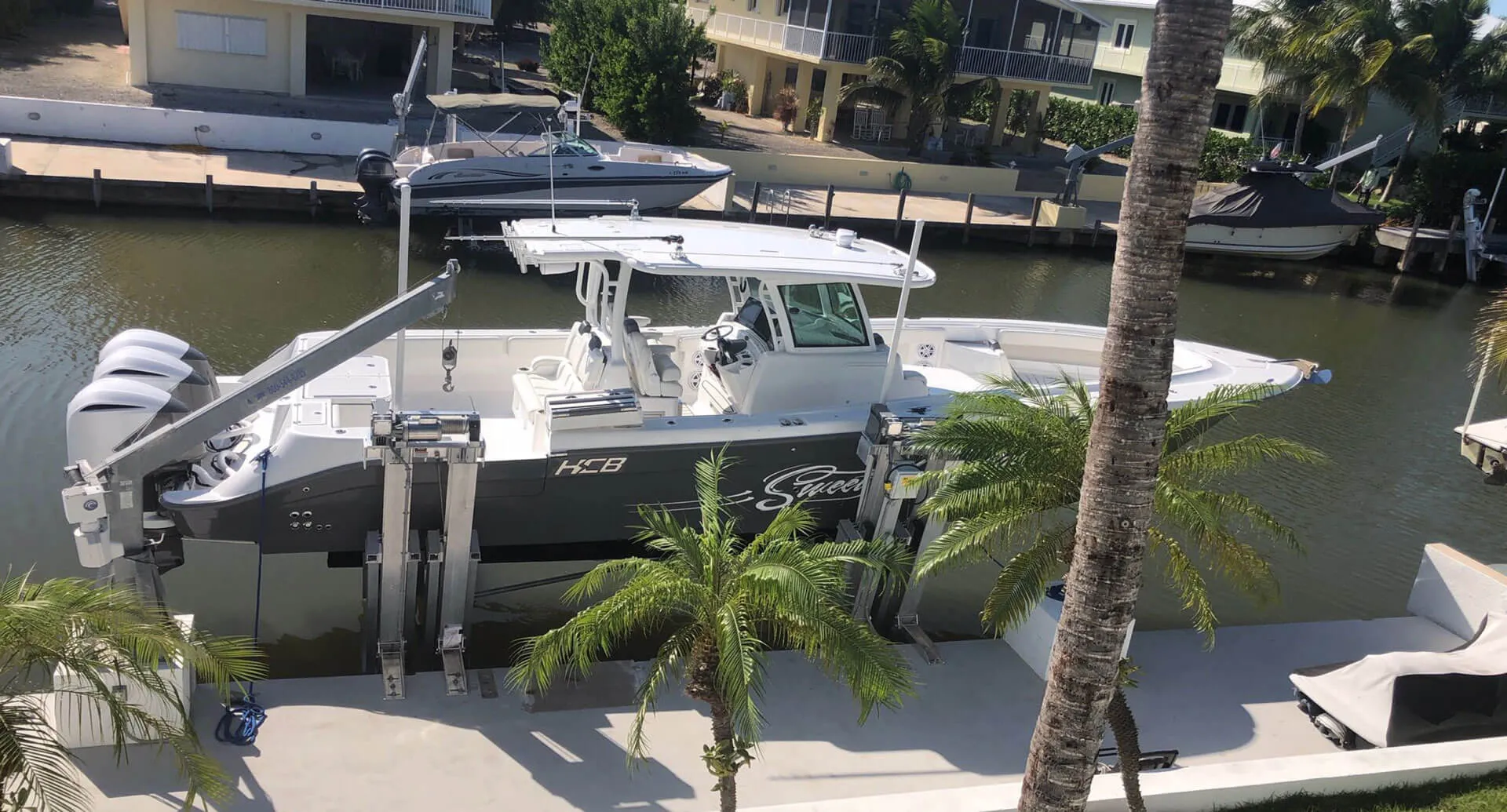
Boat lift cables are the load-bearing backbone of any cable-driven lift system. They run through a series of pulleys and drums to raise and lower the cradle that holds your vessel. Every time the lift operates, those cables absorb the full weight of the boat and distribute it across the system.
How Lift Cables Work
Cable-driven lifts rely on steel cables wound around a drum, guided through pulleys, and attached to the cradle at multiple points. When the motor runs, the drum winds or unwinds the cable to raise or lower the boat. The system depends on even tension to keep the cradle level and the load balanced.
What Failure Looks Like
Failure isn’t always a sudden snap. It shows up as fraying, where individual wire strands begin to break. It shows up as uneven tension, where one cable stretches or weakens faster than the others, causing the cradle to tilt.
And yes, it sometimes shows up as a complete break, dropping the boat without warning and putting everything in the immediate area at risk.
Common Causes of Boat Lift Cable Failure
Cables don’t fail randomly. In most cases, the cause traces back to something predictable, preventable, or simply ignored for too long. These are the five most common reasons lift cables give out:
1. Corrosion from Saltwater Exposure
Saltwater accelerates oxidation on steel cables faster than most boat owners expect. Even cables rated for marine environments break down when salt deposits are left to work into the strands between uses.
2. Lack of Lubrication and Maintenance
Cables need regular lubrication to reduce friction between wire strands and at contact points with pulleys and drums. Without it, metal-on-metal wear compounds with every cycle.
3. Overloading the Lift
Every lift has a rated weight capacity. Exceeding it even occasionally puts stress on the cables that accumulates over time and accelerates failure well ahead of schedule.
4. Misalignment of Pulleys or Drums
When cables don’t run true through the pulley system, they wear unevenly. That localized wear creates weak points that fail under load long before the rest of the cable shows visible damage.
5. Age and Normal Wear
Even well-maintained cables have a finite lifespan. Most marine-grade lift cables last between two and five years depending on usage, load, and environment. Age alone is reason enough to replace them on schedule.
Warning Signs Your Boat Lift Cable Is Failing
Cables rarely fail without warning. The signs show up gradually, and catching them early is the difference between a scheduled repair and an emergency. If you notice any of the following, stop using the lift until the cables have been inspected.
| Feature | Warning Sign | What It Indicates | Urgency Level |
| Visual Check | Visible fraying or broken strands | Wire fatigue or wear at stress points | High — stop using immediately |
| Corrosion | Rust buildup or discoloration | Corrosion is weakening the cable core | High — inspect and replace |
| Alignment | Uneven lifting or tilting of the boat | Uneven cable tension or partial failure | High — stop using immediately |
| Audio | Grinding or unusual noises | Pulley misalignment or cable damage | Medium — inspect promptly |
| Tension | Slack or loose cable tension | Cable stretch, wear, or drum issues | Medium — inspect promptly |
A worn cable doesn’t get better on its own. With each cycle, the lift runs on a compromised cable, adding stress to an already weakened system. If any of the warning signs in the table above are present, stop and call a technician. The cost of an inspection is a fraction of the cost of a failed cable.
What Happens When a Boat Lift Cable Breaks
When a cable fails under load, the consequences move faster than anyone nearby is able to react. The cradle drops or tilts sharply, shifting the boat’s weight in an instant. Hull damage, structural damage to the lift itself, and motor or drive system damage will all occur at the same moment.
The safety risk is just as serious. Anyone standing on the dock, the boat, or the lift structure when a cable snaps is in real danger from the sudden movement, falling hardware, and the boat itself shifting position. Children and pets near the water are especially vulnerable in these situations.
Emergency Steps to Take If a Cable Snaps
Acting quickly and correctly in the moments after a cable failure limits damage and keeps people safe. Follow these steps in order.
1. Stop the Lift Immediately
Cut power to the lift motor the moment something feels or sounds wrong. Continuing to run the system under a failed or failing cable puts additional stress on the remaining cables and risks making the situation significantly worse.
2. Clear the Area
Get everyone away from the lift, the dock, and the boat. A partially failed cable system is unstable, and a second failure is likely to happen without warning. Keep people and pets at a safe distance until the situation is assessed.
3. Turn Off Power to the System
Go to the breaker or power source and shut the lift system down completely. This prevents accidental activation and removes any risk of the motor engaging while the boat is in an unstable position.
4. Stabilize the Boat If Possible
If the boat is partially lowered or listing, and it is safe to do so, use dock lines to secure it and minimize movement. Do not attempt to operate the lift or reposition the boat using the lift system under any circumstances.
5. Contact a Professional Repair Service
Call a qualified boat lift technician before doing anything else. A failed cable under load is not a DIY situation. Attempting repairs without the right equipment and training risks injury and additional damage to the lift and the vessel.
How to Prevent Boat Lift Cable Failure
Cable failure is largely preventable. A consistent maintenance routine catches problems early and significantly extends the system’s life.
Inspection and Lubrication
Visually inspect cables monthly for fraying, rust, kinks, and uneven wear. Apply marine-grade cable lubricant every 30 to 60 days to reduce friction and displace moisture. After saltwater exposure, rinse cables with fresh water before salt has a chance to settle into the strands.
Replacement Timeline and Weight Limits
According to the National Marine Manufacturers Association, the recreational boating and fishing industry generated $38.4 billion in the U.S. in 2024, underscoring the significant impact when equipment fails.
Most marine-grade cables last 2 to 5 years, depending on usage and environmental conditions. Stay within the lift’s rated weight capacity on every use, and verify pulley and drum alignment regularly to prevent uneven wear.
When to Replace Boat Lift Cables
Waiting for a cable to break before replacing it is the most expensive approach a boat owner can take. The right time to replace is before failure, not after. If cables show visible fraying, rust penetrating beyond the surface, flattened strands, or uneven tension across the system, replacement is overdue.
As a general rule, marine-grade cables should be replaced every two to five years. Lifts in saltwater environments or under heavy use sit closer to the two-year end of that range. When replacing, always use marine-grade cable rated for the lift’s full capacity and replace all cables at the same time.
Professional Boat Lift Inspection and Repair
A cable failure isn’t always visible to the untrained eye. Corrosion works into the core of a cable while the exterior still looks serviceable. Professional inspections catch what routine visual checks miss.
Annual service with a qualified technician keeps the entire system in check, not just the cables. Pulleys, drums, motor components, and structural hardware all get assessed alongside the cables. That complete picture is what prevents small issues from turning into expensive emergencies.
What professional boat lift inspection and repair delivers:
- Accurate diagnosis of cable wear, corrosion, and tension issues before failure occurs
- Safe cable replacement with marine-grade materials rated for the lift’s full capacity
- Full system inspection covering pulleys, drums, motor, and structural components
- Priority response for emergency repairs when a cable fails unexpectedly
Partnering with a qualified technician means problems get caught before they happen.
Don’t Wait for the Cable to Tell You
Boat lift cables carry significant weight every time the system runs, and they do it quietly until they can’t anymore. The warning signs are there for anyone paying attention, and the steps to prevent failure are straightforward. The cost of staying ahead of it is a fraction of what a failed cable costs.
At Hurricane Boat Lifts, we bring the expertise to keep your system running safely, season after season. From routine inspections to emergency cable replacement, our technicians know these systems inside and out and respond when it matters most.
Contact Hurricane Boat Lifts today to schedule a comprehensive boat lift inspection or request emergency repair service. Protect your vessel, your lift, and everyone on the dock.
Common Questions About Boat Lift Cable Failure
The most common causes are saltwater corrosion, lack of lubrication, overloading the lift, and pulley or drum misalignment. Normal wear over time plays a role, too, especially on older systems. Most failures stem from deferred maintenance rather than sudden defects.
Visible fraying, rust buildup, and uneven lifting are the most common early indicators. Grinding noises during operation and slack cable tension also signal trouble. Any one of these warrants a professional inspection before the lift is used again.
No. A frayed cable has already lost structural integrity. The remaining strands are carrying more load than they were designed to handle, and continued use accelerates failure.
Most marine-grade cables should be replaced every two to five years. Lifts in saltwater environments or under heavy use fall closer to the two-year end of that range. Replacing on a schedule is always safer than waiting for visible wear.
Cable replacement without the right equipment is dangerous. A professional technician has the tools to safely tension, align, and secure replacement cables. Attempting it without that training risks injury and further damage to the system.
Stop the lift, clear everyone from the area, and cut power to the system. Stabilize the boat with dock lines if it is safe to do so. Then contact a qualified repair technician before anything else.